
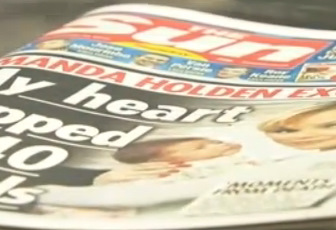
Imagine for a moment two people. One of them has spent the last decade reading only the Sun, the other only the Guardian. Now ask yourself: which of them would have the greater understanding of the hopes and fears of the British people? Which of them would have the better chance of articulating the concerns of ordinary people? Which of them would be better placed to lead Labour back to government? The answer should make us think twice about how we welcome the Sun on Sunday.
There were plenty of people who didn’t buy the Sun on Sunday this week, of course. Some of them were working, some of them were busy, others simply didn’t care. But among Labour people, there was a separate strain, as if not buying the Sun on Sunday was an act of political loyalty on a par with knocking on doors or delivering leaflets. Let’s be clear: the 21st century has the potential to be Labour’s century, or it could be another century dominated by the Conservatives. But that has nothing to do with the success or failure of this newspaper. Even the question of whether or not we make this a one-term government or spend a decade in the wilderness will not turn on the fate of the Sun on Sunday.
Let us be clear: if Rupert Murdoch had never left Australia, Margaret Thatcher would still have decisively realigned British politics after 1979. Labour would still have been routed in 1983 and 1987, and John Major would still have won the 1992 election. Labour lost in 1979 because it had failed to govern effectively, and it was shut out of power for two decades because it ceased to represent the British people in any meaningful sense and instead represented only the narrow interests of a small group of people on the left. Neil Kinnock didn’t lose because of the frontpage of The Sun. He lost because he had no feel for the concerns of aspirational Britons and was out of touch with modern Britain.
Equally, Tony Blair didn’t win in 1997, 2001 and 2005 because had the support of the Sun; he had the support of the Sun because he had a message and vision that had broad support. Only the wildly optimistic or the blindly tribal thought that Gordon Brown still had a chance of winning the next election when the Sun endorsed David Cameron; the miracle of that defection was not that it happened but that it took so long to happen. If Ed Miliband can transform Labour into a credible party of government, then he has a good chance of securing the endorsement of the Murdoch press. If he doesn’t, then he won’t. Newspapers, no matter how successful they are, aren’t causes, but consequences. They reflect the world as their readers already see it.
What will, in part, shape whether the next election makes this is a one-term government or the start of a period of prolonged Conservative rule, is whether or not we choose to communicate on our own terms, or in the language and priorities of ordinary people, as Patrick Macfarlane has already argued. One of Archbishop John Sentamu’s former press officers wrote this week that it was his intention that the archbishop should make ‘full use of the pulpit’ offered by the Sun and, latterly, the News of the World. Sentamu’s weekly column in the Sun on Sunday will be read by far more people than will head into a church on Sunday. That is communicating with people in terms that they understand. That is something we have to do to win, regardless of whether or not the Sun rises on Sundays or not.
—————————————————————————————
Stephen Bush is a member of Progress, works as a copywriter, and writes at adangerousnotion.wordpress.com
—————————————————————————————
but those lemmings will still rush off a cliff until we can turn them around and point in another direction,
I think people in general ARE beginning to look over their shoulder,all people,I mean look at this 500m in avoided Tax just having to be paid after all by Barclays ,and people,all people are realising that this will be
only the tip of the iceberg or erm cliff.
Excellent article. I agree entirely.
The integrity and intellectual rigour of the arguments and the MP’s who promulgate them will determine which party comes to power. Too many ‘professional’ politicians are obsessed with politcal dogma, and blind party loyalty. When will westminster understand that the british electorate is not quite as stupid as they think – despite their choice of newspaper. When we get MP’s who not only have a political position but also one based on pragmatism and respect for the electorate, they will be voted in. And when one of them leads their party, their party will be voted in e.g. Attlee, Thatcher, Blair. The problem for MP’s is the age old one of the corrupting influence of power, and for most what starts of as pragmatism becomes dogma for simple psychological reasons (defending past decisions). What we need to make progress is for politics to be dominated by people other than polticians. Any ideas on how to do that?
I’d rather lose than come to government to fail , do little, and ultimately disappoint, which would be the outcome of implementing Progress policies