
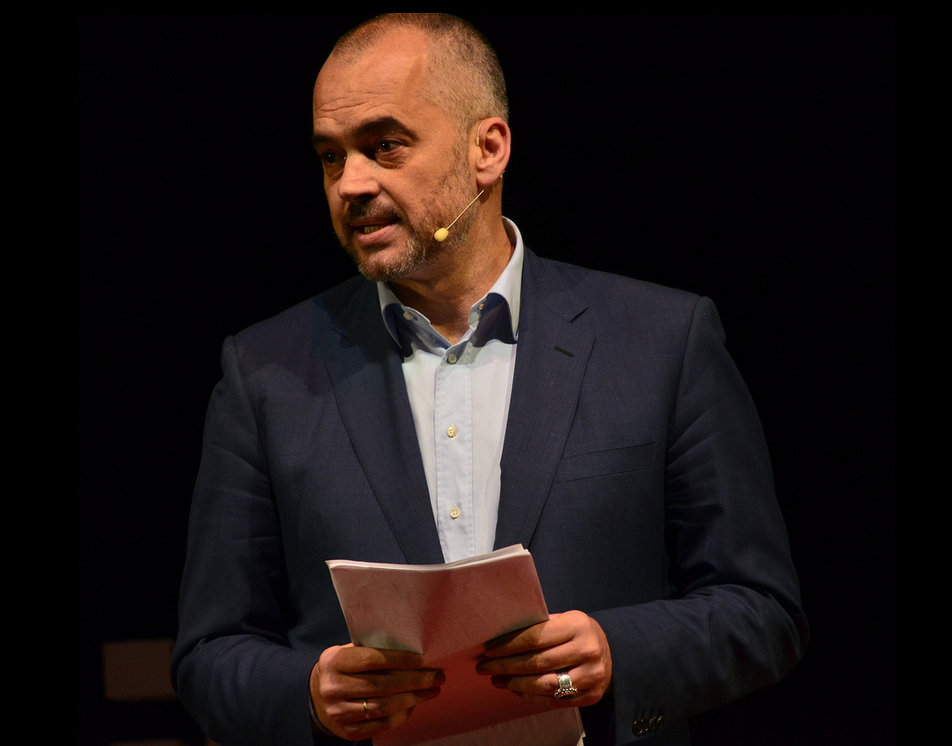
Last month the new government of Albania secured a landmark victory with a positive recommendation from the European commission for the country to win European Union candidate status. With the double-rejection of the previous administration’s bids, it indicates a new start for the country and reflects the wider positive changes coming out of Tirana since Edi Rama was inaugurated as its new prime minister in September.
Rama won a landslide victory in June on the theme of an Albanian ‘renaissance’, having studied and then sought to adapt many of the strategies and campaign methods of New Labour. Professional campaigning came straight out of the 1997 textbook, complete with grids, rebuttal units, key campaigners, a ‘road to the manifesto’ policy development process, all the way down to the purple rebranding of party headquarters. Communications were also modelled on Millbank Tower standards; a prerequisite in a country where partisan news programmes dominate primetime across the channels. Social media outreach took on these principles too and adapted them for a modern campaign.
A former artist and basketball player, Rama is one of the few heads of government equally at ease addressing the United Nations general assembly then chatting with Bono in the margins afterwards, or delivering a TED talk about what it took to transform Tirana as its mayor for a decade, now viewed by half a million people on YouTube.
Then there is the policy programme. Albania possesses the stunning beaches and landscapes of its Greek, Bosnian and Croatian neighbours, and you might forgive yourself for thinking you were in any upmarket Mediterranean town on an evening out in Tirana’s ‘Block’ neighbourhood. However, it remains Europe’s poorest nation.
Socially, the promise of 300,000 new jobs is a lifeline for young people lacking opportunities. Creating NHS-style free healthcare provision will come at a price, but the new government will seek to deliver it by enforcing tax collection from high earners evading their commitments.
Indeed, wider economic reforms and beating corruption and organised crime are essential conditions for building confidence with inward investors. That is why the government’s first actions included the launch of a national economic council and recruitment of independent consultants to get a proper fix on the scale of the challenges being faced.
International organisations make similar demands. Candidate status remains contingent on tackling corruption alongside continued free and fair elections, so it is a mark of the new administration’s credibility and commitments that progress with Brussels has been made so swiftly.
It is also beginning to be noticed more widely that Rama has plans not just to change Albania but to develop pan-Balkan diplomatic and economic strategies aimed at assisting the region as a whole, not least in its relations with the EU.
Albania has remarkable potential and Rama and his government have made a good start. Over the next four years they deserve strong support from Britain and the Labour party to deliver the renaissance they were elected to bring about.
——————————————————–
Alastair Campbell is an adviser to Edi Rama
——————————————————–