
Michael Barber, head of Tony Blair’s No 10 Delivery Unit reflected that while a week is a long time in politics, five years is not much time at all. The drama of day-to-day politics is enthralling. But genuine transformation requires discipline and focus on a long-term strategic plan. Five years can slip away with only minimal structural difference. This is a frustration experienced by many leading politicians working against the clock to turn their policy tankers in the direction of lasting change.
Labour is focusing on a new destination. We see that clearly in the work of Chuka Umunna on Agenda 2030, setting out a plan for prosperity and seizing opportunities for an evolving global economy.
Policymakers need to consider what parts of the existing economy will help us get to this new destination most efficiently with the most benefit. The creative industries in general and the music industry specifically must be lenses to this vision. When the Department for Culture, Media and Sport published its latest creative industry economic estimates, they found that employment in the creative economy grew by 143,000 (6 per cent) between 2011 and 2012, a much higher rate than the economy as a whole (0.7 per cent). In an evermore service-and-leisure-based economy, it makes sense that employment attributed to the creative economy will grow faster than the economy as a whole.
Music is a vital part of the creative economy. To better understand its economic contribution, the music industry as a whole has come together to share data and have its economic contribution assessed by UK Music, the umbrella trade body that I am chief executive of, in an analysis peer reviewed by Oxford Economics. This work is brought together in a report called Measuring Music, published this week by UK Music.
We found that in 2013 the growth in the gross domestic product contribution of music (9 per cent) significantly outpaced the GDP growth of the economy as a whole (1.7 per cent). The export performance of music also outperforms the economy average – music exports now equate to almost 60 per cent of music’s GDP contribution, nearly twice as large as the average ratio of exports to GDP across the economy. The United Kingdom music industry’s ratio of exports to GDP contribution even beats that of the German economy – the export powerhouse of the European Union economy, often lionised by Stewart Wood, an important influence on Labour’s economic strategy. In doing all of this, music sustains 110,000 British jobs.
These jobs cover recorded, live and other parts of the music industry. Success in the recorded industry makes live success easier. Arenas need hit records to be filled. Stable and secure copyright strengthens the recorded industry. The different parts of the music industry grow together. The music industry is its own mutually dependent creative ecosystem within the broader creative ecosystem of the creative industries. All of which requires diligent cultivation by responsible custodians in government. If Labour is serious about economic success, it should be serious about being such custodians.
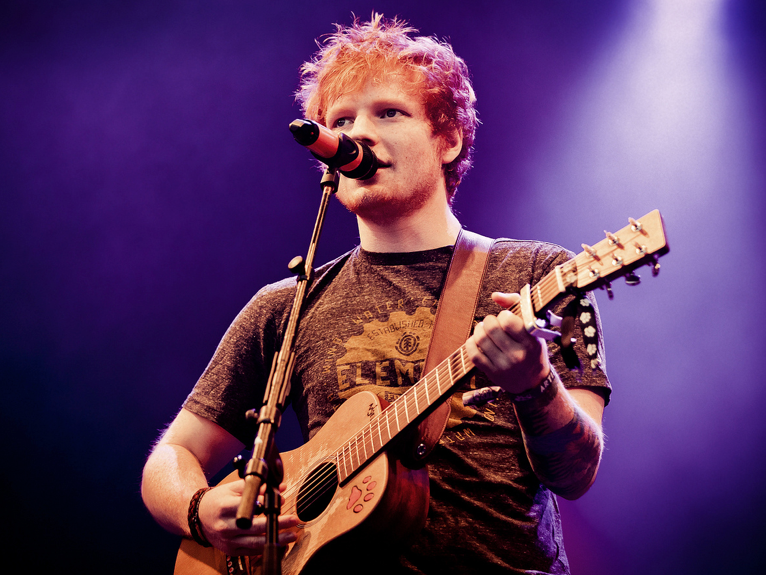
Noel Gallagher visiting Tony Blair in No 10 soon after Labour’s election in 1997 became a defining Cool Britannia moment. ‘Measuring Music’ contains a case study on Ed Sheeran. He was born in Yorkshire, where Ed Miliband, the next Labour prime minister, has his constituency, and is frighteningly young to have had an album top the iTunes charts in 83 countries. This is testament to his talent and the global appeal of British music.
We might sometimes feel in the UK that our best days are behind us. That we once had globally dominant industries but we do not any longer. In fact contrary to those who peddle the myth that we are a country that has lost its competitive advantages, the UK remains a world leader in music. Maybe one day in the not too distant future, we will find that two Eds – Miliband and Sheeran – are better than one.
———————————
Jo Dipple is chief executive of UK Music
———————————
You can read the Measuring Music report here
———————————
Photo: NRK P3