
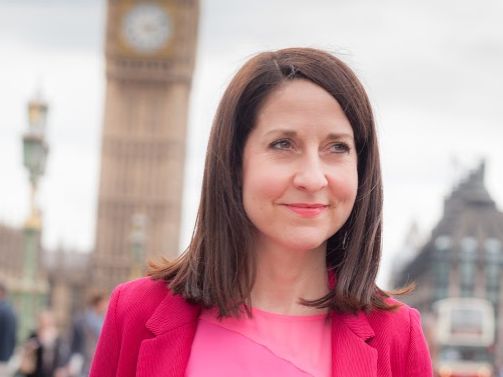
Liz Kendall’s leadership candidacy has broadened Labour’s agenda while focusing on the absolute need to win elections, which we can only do on a programme that includes all significant sectors of the population.
She shows admirable courage in tackling difficult issues and has caused me to reconsider my own knee-jerk responses to government policies in this, the sixth of at least ten years of Tory rule. For example, it was wrong for David Cameron to fragment schooling by introducing free schools, especially where they were not needed, and to fund them disproportionately. But anyone who has ever been bruised by campaigning against a school closure knows that blanket scrapping of institutions is not the answer. If free schools work, let them stay as part of the diversity of provision that we introduced, fund them fairly and demand the same quality of output as we expect from others.
Never has spending two per cent of GDP on defence been controversial for Labour – until now, it seems. Just because Liam Fox supports two per cent doesn’t make it wrong; Barack Obama does too. No one believes that the world or even Europe is safe today and peacekeeping and disaster relief will continue to be needed. And for many working class young adults the armed forces provide a degree of skills and self-discipline which they might not get elsewhere. The tragedy is not that we invest in the military but that so many end up on life’s scrapheap.
As for these being Tory policies – what nonsense. Apparently an enhanced minimum wage is now a Tory policy, so should we scrap our commitment? Of course not.
But I am being defensive.
What is revolutionary about Kendall is her commitment to decentralising power. She believes that local people have rights and opinions and should have the capacity to influence, even control how local services are delivered; that we should continue to reform public services, like making health ever more patient-centric; and that where powers can be devolved to councils, and from councils to communities, they should be. She says that the economy should be no political football; long-term sustainability, avoiding Greek-style chaos, is essential. We should cultivate business as a force for good, not least because we will, frankly, never return to the levels of public spending that we enjoyed in the past. That Liz questions whether the 15-year-old structure of tax credits is still right for today is healthy; hitting the poor is not. Right in the short term, a permanent subsidy for low-paying employers such as working tax credit cannot be sustainable. That she opposes Tory trade union reform is absolutely right too – it is an arbitrary and nasty solution to a problem that does not exist.
I know all four candidates personally and worked closely with both Andy and Yvette in government. I like and respect them both, but I do not know what new ideas they bring to this new world. Jeremy aspires to the good old days of 1983. I find Kendall’s approach intellectually stimulating and passionate in ways which excite me, now that I have had five years out of Parliament to reflect on such things. I will not be going back into government, but Labour must – Liz can build the momentum to do that.
———————————
Tom Levitt is former member of parliament for High Peak. He tweets at @sector4focus
———————————
Photo: Progress

this is hilarious – is it to be called the ‘beige revolution’
Her only policy is reversing Osborne’s inheritance tax cuts and diverting the billion pounds to early years education, and she has only come up with that since the Corbyn campaign took off. If he had suggested it, then the papers that favour her would have gone bananas.
What’s revolutionary about this? I’ve read her full statement on Labour List & was bored.
Here we go again. The same old nonsense about opponents of so called ‘free schools’ wanting to close them. There is no intention to close schools which have sufficient numbers of pupils in them, particularity in the light of the Tories’ school places crisis. What we want is to return them to local – or regional – accountability. That will mean some form of democratically accountable scrutiny by an Education Authority, not the Tories’ regional commissioners. These authorities should also be able to open new schools in areas of need rather than allowing schools to be set up where there is no clear need, at the expense of places where there is an acute shortage. By deliberately misrepresenting the position of opponents of ‘free’ schools. Liz Kendall and her supporters show the weakness of their position.
Assume she is leader and facing Cameron at PMQ’s. How do you think she would do? There are weather announcers on BBC Look East that I think would do a better job of it. Ask her to have a go at David Davis when she has the time.
There’s too much blather in all the Leadership campaigns. That’s the appeal of Abbott, Corbyn – and Kendall. She’s intellectually stimulating AND passionate. We need to rethink how we are a campaigning party to make the world a fairer place or we are nothing. We need to rethink the Mandelsonisation of the party. All the blather is because we have a culture of being on message, rather than thinking creatively. If Corbyn runs the party for a while, this may change.
Like many career Politicians, Liz Kendall is gutless and lacking in depth having never had a “proper job.” Plenty of “mouth” and verbal diarrhea but just bluff and bluster. Older, more mature people (the Grey Vote) are contemptuous of Career Politicians. Talk to most in the Public Sector (e,g, NHS) and they blame them for all the damage they have inflicted upon them over the decades. So many decisions by career ministers – who have had no experience of the area they head up [e.g. Education] – have been a disaster.
I think people will be surprised by Jeremy Corbyn, if he gets the leadership. He has integrity and is, seemingly, squeaky clean, in contrast to the bluff, bluster, spin and dishonesty of Cameron and his Tory mates. I heard him at the Co-op Party hustings in London, and he spoke well. I think that he is savvy and will modify his approach to controversial issues (e.g. CND). His style at the Despatch Box will probably avoid the silly, childish knock about. I also think, because of his maturity and career outside of politics, the Grey Vote will identify more with him than the useless, gutless and scared career politicians of Kendall, Burnham and Cooper who meekly follow the Tory lead. Although I emphasised the importance of the Grey Vote at a Progress annual conference, a year before the election, my warning was ignored. Now, the penny has finally dropped! Corbyn is more likely to carry the Grey Vote than immature, empty Career Politicians.
Comparisons are being made with Michael Foot but the grossly unfair “Worzel Gummage” image (created by the Right Wing press) – and his fervent CND support – sank Foot. Corbyn may need a make over, but he will be more respected and present a better public image. As to the re-nationalisation issue, there is deep Public dissatisfaction and anger towards the Privatised, former Publicly owned assets, and there may well be considerable Public support. It has long been my view that Socialism will not work unless the People want it. At the Co-op Party conference last year, I argued the case for a mass referenda system. Corbyn may be well be advised to use it before he attempts implementing radical policies.
In five years time, the political scene may well be drastically altered with the Tories regaining its Nasty Party image and deeply unpopular when the house building bubble bursts, as it will, and the Public resentment of the carpet bagging of Public assets by Osborne and his rich, elitist mates.
To talk about Liz Kendall as “gutless” is the most ridiculous thing I have heard for a long time.
So, what really “radical” ideas has she forwarded? She has been accused by many as “swallowing the Tory manifesto” [which many in Progress do, anyway]. That’s why New Labour is accused of “just being a bunch of Tories” by “ordinary” people. Does that fit with YOUR political philosophy? I assume that you are a Labour councillor? It takes courage to put ones head above the parapet.
As to accusing Career Politicians of being “gutless,” the evidence is overwhelming. Some while ago, Chris Bryant, for example, was going to admonish Tesco. When they retaliated, a few hours later he scuttled away into a corner and ended up praising them! Like so many Career Politicians in Progress, they lack real life experience and never having had a “proper” job. They are bland and worried stiff that they might do or say something REALLY controversial, in case it harms their political careers. I note Andy Burnham has announced more radical ideas, but that is just in the wake of Corbyn’s popularity.
Just over a year ago, at a Progress fringe, I said to Liz Kendall (who is shadow minister for “old” people) “Have you ever worked in the Public Sector” (let alone the NHS!). She was like a rabbit caught in headlights “Er, er…No”. This is why Career Politician ministers made so many bad decisions e.g. failed IT systems (billions wasted), “SMART meters, etc, etc. They have no EMPATHY with the ministries they are in charge of. Gove, the arch Career Politician (not a teacher), has done immense damage to education and now he (not a lawyer) is destroying justice for the “little” people.
Vic Parks
When I was a 20-year old Liberal student, 40 years ago, I suggested to friends and colleagues that decentralisation to communities would be a good thing: that altruistic excellence would be created alongside chaos and self-interest, and that that excellence would eventually permeate all society. Of course I was wrong, as those friends and colleagues told me – for a start, chaos is never accepted in Britain for more than a couple of days (look at Project Stack for the truth of that), and then self-interest tends to trump altruistic excellence, and finally why permeate when you could just take over? So I gave up on radical centralism and joined the Labour Party.
It’s a bit of an ego boost that both one of the Labour ledership contenders AND the Tory chancellor are now both touting my ageing idea as the saving grace of Britain, but it won’t wash. You can’t let any old community plan be put into practice: you have to determine whether it’ll work, whether it’ll pay for itself, and whether it fits in with your world view. In other words, you have to govern, and you have to police. It isn’t necessarily either cheaper or freer than the current system, and it certainly isn’t demonstrably better. Sure, you get leaders like Ken and Boris and Nicola if you’re prepared to think at a regional level: but our society just won’t tolerate a Boris on every street corner. I don’t think this is revolutionary, or even practicable: it’s just something to say in an election campaign.
Hi Nick
Did you mean “ you gave up on radical DECENTRALISATION?” not centralisation?
What bothers me about the “localism agenda” is that society becomes fragmented into little groups. Are we “one nation,” The Big society or similar phrases? We have seen
the growth of gated communities, parking permits, closed off roads, etc. Taken to extremes, toll gates will be reintroduced. At a simple level, there are many who believe that the street outside their house is theirs, not ours. Is walking in the countryside for everyone or just for those who live in rural communities? Should they man the barricades to keep the “townies out?” After all, it is THEIRS, – isn’t it?!
When I visit Scotland from SE England), I like to feel that we are “neighbours” fellow
citizens, etc. Of course, there are cultural differences. When I was in the Merchant Navy/RNR, it was a melting pot for people from all parts of the UK. Mostly, they were decent, “nice” people. There, I learnt TRUE comradeship and, in many ways, that we humans “are all the same.”
Having experienced local groups (e.g. Residents’ Associations), many are controlled by
control freaks and egotistical bullies (Oh, does that sound like Labour and other political parties?!). This is contrary to the assumptions of naïve career politicians, (relying on theories drawn out of a book) that local groups are run by decent, genuine, democratic, “nice” people! After all, aren’t local councillors representatives? With the rise of voter apathy, I think not!
Like most things, it is complicated. E.G. Should a local community oppose a wind or
solar “farm” in their LOCAL INTEREST or should they be overridden, in the NATIONAL INTEREST? Oh, and the fracking debate….
Then, there’s the INTEGRATION issue. Should local ethnic communities be totally autonomous, perpetuating their cultures which often conflict with the indigenous population? Have certain towns and cities become ethnic “ghettos?”
Hello Old Geezer
I believed in being a radical of the centre, hence radical centralist. I may be a bit less radical these days, but my position hasn’t changed much. I genuinely still believe that it’s the pragmatic place to be. You’ve given some good examples of ‘community power’ at its level worst: I believe that devolution to the community is far from pragmatic, and when enforced (thankfully by George Osborne, not Liz Kendall) it will prove disastrously non-pragmatic, extremely expensive, and relatively short-lived.
Hi Nick
I doubt that few people read these comments, and I often wonder whether I ought to be using my time in better ways. Progress is a breeding ground for Career Politicians – it is full of ambitious young people fresh out of university and wet behind the ears – all looking for a start on their political careers or, indeed, parallel careers in NGOs, “Think Tanks,” etc. [being a retired Senior Lecturer, I am passionate about Education, but degrees and PhDs in Humanities are just a foundation for life, NOT an end]. What you, I and others in the Grey Vote have is life experience and jobs outside of politics. As a Progress member of some 20 years, I think that they view us with contempt although deep down they may fear us because we can expose their weaknesses e.g. lack of depth. I suppose that is why they will not listen to voices of experience and maturity and, if the messages DO get through, we will not get any credit! The Trade Unions are so anti Progress because they represent real workers in real jobs, who have to struggle to survive. Many of the career politicians come from comfortable Middle Class backgrounds and get considerable support from their parents.
I think Progress and the New labour Intelligentsia are worried about Corbyn’s success because they could see their careers going up in a puff of smoke (self interest, of course!). To get people from varied backgrounds into Parliament, it may come to the de-selection of Career MPs. I wondered whether there was sufficient support for a new “Maturity Party” or “The Nice Party.” Even the “youngsters” I talk to have no respect for Career Politicians. That’s one reason why they do not vote.
Vic Parks