
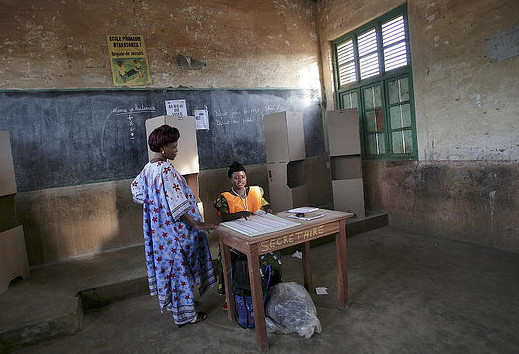
November 28, 2011 was historic in the DRC; the first ever democratic national election organized by the Congolese themselves. This relatively undeveloped voting system left the electoral process vulnerable to systemic and local corruption that could erode its very legitimacy. Two years ago I visited communities affected by violence in the eastern DRC, and in late November I returned to help monitor and evaluate the election. Like so many, I hoped that a fair democratic election would serve as a catalyst for change in this war-torn nation.
I was one of ninety international observers contributing to the European Network for Central Africa’s observer mission working in partnership with Congolese civil society organisations and Action for Transparent and Peaceful Elections network across all eleven provinces. Our objective was to ensure a peaceful and reliable process which respected Congolese electoral law and human rights.
Over the weekend, we checked that preparation was underway at the polling centres (converted classrooms), checking whether the buildings were secure and if lists of voters had been posted. We took notes detailing whether ballot materials had been delivered to the centres and securely distributed to individual classrooms.
By Monday 28 November, election day, the atmosphere was electric. It was 5.30am, and already people were queuing for the anticipated 6am door opening. They had come from all over, some traveling great distances to participate in this momentous event. Their enthusiasm and genuine desire for a transparent and fair electoral process was not only inspirational, but contagious. When the doors opened, Congolese citizens literally ran into classrooms, eager to be among the first to cast their vote. This was far more than civic obligation, it was their opportunity to choose their leaders, and they exhibited genuine gratitude for the presence of international observers.
As evening fell, votes were counted in each classroom and candidate witnesses signed agreed ballot figures. They were then sealed and transported to the national results centre for verification. While I bore witness to several amateur practices – including loose ballot papers, sloppy admin, and human error in vote counting – both voters and local polling staff were determined to conduct themselves properly, and tried to do so.
However, reports soon broke out concerning violent incidents in the Katanga province and there was clearly intimidation in other areas. And soon the media was filled with controversial reports surrounding the inauguration of presidential incumbent Joseph Kabila. But the vast majority of Congolese did vote peacefully and this should not be discounted or overlooked.
As vote counting in the parliamentary elections continues to be suspended, with officials seeking assistance from foreign election experts, I worry for the Congolese citizens who were so desperately hoping to improve the reputation of their country, both in Africa and beyond.
Much of the international community has responded to the elections with condemnation and frustration. However, it is vital that criticisms of a few do not negate the sincere efforts and genuine hopes of the many. My personal experience is that most Congolese believe in a credible and honest democratic election, and went to great lengths to participate. A dismissal of their efforts risks undermining their faith in democratic values, the very values which the international community has worked hard to support. It is imperative that global criticisms of corruption of the Congolese few should be met equally with admiration of the Congolese many who have endeavored to participate openly and fairly. And international donors, like the UK and the EU, must insist on lessons learned so that future Congolese elections meet the aspirations of the Congolese people more consistently.
Jack McConnell is the former first minister of Scotland and was the prime minister’s special representative for peacebuilding from 2008 to 2010