
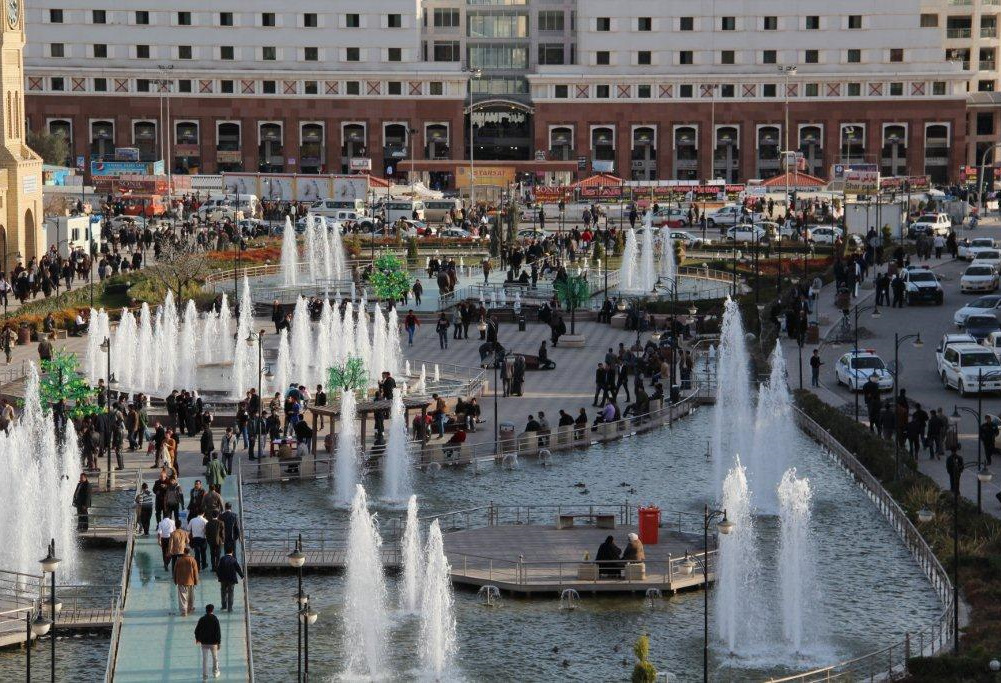
Iraqi Kurdistan is on the map for an increasing number of British businesses and universities. This reflects its growing economic clout as the safest and most stable part of Iraq with considerable oil and gas assets as well as a huge pent-up demand for infrastructure and services.
British bodies will succeed on their own merits but are helped by the deep and popular affection for the UK in the Kurdistan region. Its people thank John Major and Tony Blair for saving them from genocide and ousting the Ba’athist regime in 1991 and 2003 respectively.
English is the second language: very many political and business leaders spent years in exile in this country and they value the quality of our services which they can afford increasingly to buy.
Such important commercial links may seem somewhat distant and academic to many but there is also a growing network of people-to-people initiatives which bring the relationship alive for more.
The Kurdistan regional government’s multimillion scholarship programme has seen the lion’s share of postgraduates choosing British universities, which is a major bonus given falling domestic applications following the increase in tuition fees. These students will, in the words of the Kurdish higher education minister, return to Kurdistan as ambassadors for the UK and the relationship will cascade down the generations
The Kurdistan region is certainly ahead of the rest of Iraq thanks to having had longer to overcome the poisonous legacy of fascism. It has near 24/7 electricity, for instance, although demand has been rising thanks to higher living standards and more fridges and the like.
However, its public services need renewal and reform. On my eighth visit to the region recently I visited one of their main teaching hospitals in the capital, Erbil. Its administration block was shoddy and unhygienic but other blocks are being refurbished and are clean but basic.
The assistant manager was commendably candid about the state of the service and enthused about links with Sheffield Hallam University.
While I was there a Kurdish exile and senior medic in the north-east had organised a very large charity event to raise funds for the Newcastle-Gateshead Medical Volunteers (www.ngmvcharity.co.uk). He and his colleagues have made many visits to carry out specialist operations, voluntarily and at their own expense. This shows the potential power of the large Kurdish diaspora in this country.
However, he told me that his sister in Erbil prayed never to get ill because of the condition of public hospitals. This initiative may lead to a British university setting up shop in Erbil to train medical staff.
I often tell my friends that they should consider taking a holiday in the Kurdistan region. The idea of going to any part of Iraq astounds them. But the region is very safe – there have been no terrorist attacks since 2007. There is a growing tourist industry with plenty of natural beauty and historic sites to see, including one of the oldest continually inhabited cities in the world.
A group of sixth form students from Bury St Edmunds will visit two schools in the region in a few weeks’ time. Their visit could be the first of many and may come to mean that visits to Kurdistan become more and more commonplace, as unremarkable as trips to New York and Cape Town.
We visited one of the schools in Sulymaniyah, the region’s second city where we were given a royal welcome. Again, their Headteacher and her colleagues were candid about their problems and enthusiastic that links to the UK could help boost their ability to make more of their resources.
The school focuses on sport, as does the one in Bury St Edmunds and the school party from Suffolk has persuaded Ipswich Town Football Club to supply soccer kit. Our group will next try to encourage other football clubs to make connections with the soccer-mad region. The Spanish Club Real Madrid may set up football academies and our own top-notch clubs should join in and consider playing friendly matches with the region’s capable football teams.
Another popular link between Britain and Kurdistan is film. Their government and the British Consul-General recently held the first UK Film Festival in Erbil, a city without a cinema as yet although British interests may open one. Fashion shows are also being planned.
Building a film industry will enable the Kurds to tell their own story of recovery from genocide and fashioning a democratic and pluralist society while overcoming many accumulated problems which resulted from war, isolation and abandonment.
These official, business and popular links with the UK can do much to advance that process and greatly benefit Iraqi Kurdistan and its diaspora as well as the UK. Iraqi Kurdistan will then no longer be out of sight and out of mind.
—————————————————————————————
Gary Kent is the administrator of the All-Party Parliamentary Group on the Kurdistan Region and a parliamentary adviser to the KRG UK but writes in a personal capacity