
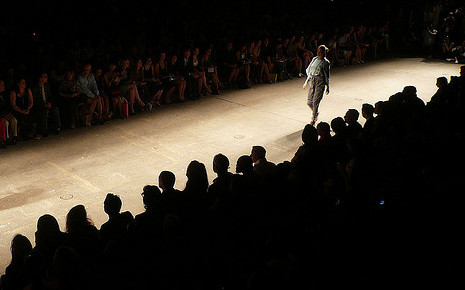
Its top stars spend their days parading the latest designs while the assembled audience look on and take careful notes, modelling what will and won’t sell out in the real world.
It is not only London Fashion Week that provokes cries of ‘who would ever actually wear that’. Thinktanks may gather together less often than designers but they still aim to have their ideas taken out into the real world. And what better place to judge how well they are faring than big setpiece moments in the political calendar like last month’s budget.
Quick to pull together a checklist of policies which it could trace back to its own reports and articles was top Cameroon thinktank Policy Exchange, which recently celebrated its 10-year anniversary. It singled out both the coalition’s apparent desire to found new garden cities and its plans to unpick national pay bargaining as emanating from its own ivory towers. Meanwhile, before the budget the Social Market Foundation released Osborne’s Choice, a report which argued for removing the winter fuel payment and free TV licences from better-off pensioners, scrapping free bus travel for the over-60s, and rolling child benefit into the existing tax credits system. After the big event the SMF lamented the ‘missed opportunity for an immediate and fiscally neutral stimulus package’, but noted that it sent ‘a clear signal that young and working age people cannot be expected to shoulder the entire burden of this huge deficit reduction’ – so, a move in the tank’s preferred direction of travel if not reaching its final destination. That said, Policy Exchange was not 100 per cent happy, either: it remarked that the stamp duty hike ‘continues to complicate a tax that is already distortionary. While the politics of this are understandable, the economic rationale is unclear: if there is a desire to tax property in a progressive fashion, there are clearly better ways of doing this’.
Time to hear from new ProgressOnline economy columnist and Smith Institute fellow, Kitty Ussher, who recently called on Labour to re-examine the Mirrlees review of taxation, despite recognising that ‘it’s all very controversial stuff which is perhaps why the politicians are sticking their heads as far into the sand as they will go.’ Will Hutton followed in her wake shortly afterwards in the Guardian, conceding that ‘Mirrlees wants to change so much that one’s head spins.’ They are right: from abolishing stamp duty to introducing a land value tax to replacing VAT there is a lot to take in. But Institute for Fiscal Studies director Paul Johnson has argued before the Treasury select committee that its recommendations could be transformative, with growth shooting up ‘percentage points rather than tenths of percentage points’.
So, much of Mirrlees is yet to trickle down to frontline policy but it may only be a matter of time before political parties truly grapple with the big question of how we pay for ourselves in the future, and just how great some of these changes will be. In the meantime, Progress’ modest claim to catwalk fame might be the government’s decision to provide taxpayers with a breakdown of how their money is spent. In The Purple Book, Patrick Diamond, also of Policy Network, argued for ‘an annual citizen’s statement, which sets out clearly how the tax system works and how public spending is allocated’. Of course, this is not a new idea – the Fabian Society’s Plant Commission report argued for just such a thing in 2000. This seems a missed trick for Labour. As new MP Gloria De Piero argued at the recent Progress political weekend, ‘everything about our politics is moving towards greater transparency’. Getting ahead of the curve in politics is as much a matter of instinct as of knowledge but sometimes the ideas pointing the way to the future are already out there being tried on for size – so it pays to get as close to the catwalk as you can.
—————————————————————————————
Osborn and Little and Large Dave /went to sea in a pea green boat/they took some funny money and /honey
just to see if it would float/you wouldn’t believe the wash was so high/the gear and the ropes quite a mess/
more tangled a tale they never could dread/their steering they couldn’t confess/we’ll fall in da water we’ll never be dry/we’re going to have to undress /there’s more to this lark than looking the part/ why did we try to impress the blokes from the city the blokes with a park/ the blokes with a wad and temptation/park the boat run for your life the workers are taking their station.
The workers are taking their station yes in life boats.
then the likkle boatty woatty will stop won’t it treeeeebark ! cos who will do the work ,you ?