
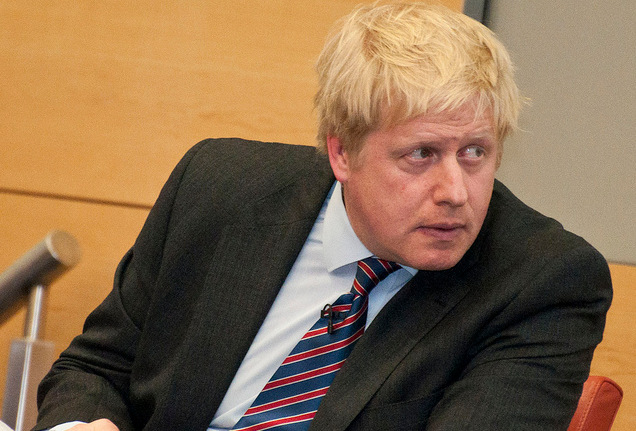
After re-election as mayor of London Boris Johnson claimed that he is ‘definitively, categorically, emphatically’ not interested in becoming prime minister. This is certainly not true – his ambition is one of the few things that Boris-watchers agree upon – and he is now the favourite to be the next Conservative leader. Bookies put him at 4/1, outrunning rivals such as William Hague and George Osborne.
To beat Ken Livingstone in the race to be mayor, Johnson had to buck the national swing against the Conservatives. His party trailed Labour nationally by seven per cent after two months of bad headlines, including a calamitous budget, a party funding scandal, double-dip recession and the Leveson inquiry. Yet Johnson won as a Conservative in a left-leaning city. Meanwhile, David Cameron is increasingly seen as out of touch – described by one of his own backbenchers as a posh boy who doesn’t know the price of milk. After almost two years when polling showed that Cameron’s popularity held up remarkably well it is now in decline. A vacancy at No 10 is more likely now that at any time in the last two years. Despite the headlines, Johnson is unlikely to get Cameron’s job any time soon. for several reasons.
First, Boris has a personal life messier than his hair. He was dismissed from the shadow cabinet by then Conservative leader Michael Howard after denials over an affair. In the mayoral race he had a highly sympathetic media, while his main opponent was mercilessly attacked. Boris’ comments that the £250,000 a year he gets as a columnist is ‘chicken feed’ and St Patrick’s Day is ‘leftie crap’ are unlikely to be forgotten so easily another time. Faced with an opponent that did not inspire such ire, Johnson would not get away with it. A senior Tory was recently quoted saying he had a ‘bottom drawer’ of material on the mayor for use if he ever came close to No 10.
Second, Boris would need to find a seat in the House of Commons. The timing is difficult for Boris. He is now committed to City Hall until after the next general election. He might find a seat in 2015, and hold it while being mayor for a short time, but he will still miss the day-to-day schmoozing needed to build up a strong base in parliament. Unlike other countries, the UK does not have a tradition of dropping popular local candidates into positions of national leadership. In France, for example, Jacques Chirac became president following a period as mayor of Paris. In the UK it is the time building alliances in the Commons tearoom that is often important.
Finally, it has done Johnson no favours to be seen as the main rival. The recent history of the Conservative party shows that new leaders were rarely the favourite. Few expected Margaret Thatcher to become Tory leader in 1975. Heseltine lurked around for years before John Major came from nowhere. Michael Portillo was a constant threat to Major in the 1990s but never got the top job. Even Cameron was largely unknown in 2005 when he became leader. Keeping your head above the parapet for too long is dangerous.
—————————————————————————————
Simon Griffiths is a lecturer at Goldsmith’s College
—————————————————————————————
The obvious choice would have been for him to Succeed Malcolm Rifkind in Kensington. Shame that such a plan would be torpedoed by the Tory gerrymandering of boundaries.
I’m almost certain if he has the ambition Grant Shapps will be the leader of the conservatives. He’s a good media performa, and people like him. Kept a low profile but pushed nasty tory agenda through with little fuss. Oh yeah and his cousin was guitarist from the clash!
You reasons are weak in the extreme:
“First, Boris has a personal life messier than his hair.” It didn’t’ stop him getting arguably the second or third best job in UK politics.
“Boris’ comments that the £250,000 a year he gets as a columnist is ‘chicken feed’ and St Patrick’s Day is ‘leftie crap’ are unlikely to be forgotten so easily another time.” It was an argument for lefties and it is now.
“A senior Tory was recently quoted saying he had a ‘bottom drawer’ of material on the mayor for use if he ever came close to No 10.” Hearsay, rumour and speculation, move to strike from the record.
“a lot of stuff about what happened in the past”. This is meaningless to what happens going forward. BoJo has proved to Tories that he can win power in the face of great odds. They won’t turn their backs on that. Moreover he has a Churchillian air to him that Tories like.
Cameron is lined up for 2015 whatever happens and Boris will be looking for a safe seat post 2016, if he goes leaves the mayoralty early he will be seen to be dumping London and you don’t turn your back on the electorate. If Cameron loses the election Bojo will be number one dog in the Tory party Within the following 3 years. If Cameron wins then Bojo will have to wait.