
Rejoice, rejoice! To the great relief of all users of social media, voting ends today for the Labour party’s national executive committee, as well as for the national policy forum and police commissioner candidates. There’s been a lot of chatter about ‘factions’ and ‘slates’ during the campaign. As usual, there have been two slates, one representing the leftwing of the Labour party, and one the centre-right of the Labour party, as well as various ‘independents’. Although they have gone by many names, in every NEC election since 1900 there have been ‘slates’ – groups of like-minded people with similar politics who stand on a common platform, support each other and seek to win seats on the NEC together. Usually these have broken down into left versus right.
The role of ‘slates’ is much misunderstood. I wrote yesterday on LabourList about the GMB’s attempts to purge Progress. This has been part of a wider bid to attack ‘factions’ and ‘slates’. Remember the despicable forgery – worthy of MI5 – which was circulated anonymously a few months ago attacking Progress? It was meant to look like it had come from the hard left (but probably didn’t). I’ve also heard plenty of people argue that slates are divisive, and ‘we’re all Labour’ and everyone should get along and play nicely.
This fails to understand the nature of the Labour party. Under first past the post, political parties are huge coalitions of broad interests. Sheltering under the Labour party’s umbrella are traditions and ideologies which under proportional representation would have their own separate parties. Labour is famously a broad church, and like all churches, given to theological disputes and schisms. Some might be as absurd and obscure as whether angels can dance on the end of a pin, or the Big-Endian/Little-Endian disputations in Swift. Others matter a great deal.
Let’s think of a few issues:
Britain’s membership of the EU;
Israel-Palestine;
The electoral system for the House of Commons;
The Iraq war;
The role of the private sector in delivering NHS healthcare;
The laws governing industrial disputes;
The future composition of the House of Lords;
Same-sex marriage;
All-women shortlists.
Like you, I have strong views about all of the above, and if you buy me a drink I’ll tell you what they are. If you were to list your position on each of the above, can you honestly say there is another Labour party member who thinks precisely the same? Even within the Bevin-Healey-Kinnock-Blair tradition in which Progress sits, there are fierce disputes over policy. It is a nonsense to suggest everyone in the Labour party agrees with everyone else. It is a bigger nonsense to claim to speak on behalf of ‘the members’ when the members have opposing and disparate views on just about everything. That’s why we need slates, so candidates can form a common platform, and give the Labour membership an honest choice based on policy.
The Labour party was united by an idea – that working men and women should have their own party in parliament; but it was created by a coalition of organisations, not individuals. These organisations included small trades unions, representing different industrial crafts and trades, from cigar-making to French polishing. They included the major industrial unions from the coalmines, cotton mills, ironworks and shipyards. But they also included groups of socialists, including the Social Democratic Federation, the Independent Labour party and the Fabian Society.
Each of these groups – factions, if you will – brought different ideas to the table. The unions brought practical demands to improve conditions in the workplace. The Fabians dreamt up the welfare state. The ILP brought an evangelical approach to tackling injustice and poverty. Into the mighty tributary of Labour flowed liberalism, Fabianism, trade unionism, cooperation, Guild Socialism, Christianity, environmentalism, feminism and Marxism. Thus from the very start, the Labour party was a coalition of different interests and ideas, often in conflict with one another. You could not join ‘the Labour party’ until 1918 – you had to be a member of an affiliated organisation first.
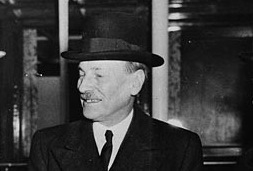
I was struck while rereading Kenneth Harris’ magisterial biography of Clement Attlee by the factionalism he encountered in the East End at the start of his political career. Returning from the trenches, Attlee sought to become mayor of Stepney. Harris writes:
‘As a school for a future Labour leader, destined later to preside over a coalition of often conflicting attitudes and interests, the mayoralty of Stepney could not have been bettered. The main cause of the troubles was the friction between the Irish and the Jews … the Irish were trade unionists whose attitudes to politics was empirical; they thought of themselves as “Labour”. The Jews were individualistic workers, sometimes owning their own small shops; yet they were more doctrinaire in their politics; they thought of themselves as “Socialist”. The ILP men, largely English, thought the Irish too conservative and the Jews too doctrinaire.’
Read any of the histories of our party – Geoffrey Foot’s The Labour Party’s Political Thought, The House the Left Built by Michael Hatfield, The Battle for the Labour Party by Kogan & Kogan, Patrick Seyd’s Rise and Fall of the Labour Left, or Dianne Hayter’s Fightback! Labour’s Traditional Right in the 1970s and 1980s – and you will see an alphabet soup of initials. CDS, LSC, ILP, LCC, LRC, CLPD, NOLS, CLV, RFMC, IWC, SO and on and on. Add to these the groupings around charismatic figures (the Bevanites, Gaitskellites, Kinnockites, Bennites, and Blairites), the ginger groups supporting electoral reform, Europe or disarmament, the women’s organisations, the ethnic and country-based organisations (‘Labour Friends of Bangladesh’ etc) and of course the affiliated trade unions, and you can see the history of the Labour party is the history of its factions.
This doesn’t mean you should exercise or excuse sectarianism. It certainly doesn’t mean that other political parties – those belonging to the Fourth International, for example – should be given free rein to infiltrate Labour. It does mean that Labour people from different traditions, with different views, can have a rigorous, healthy debate. It’s what makes politics enjoyable.
—————————————————————————————
Paul Richards writes a weekly column for Progress, Paul’s week in politics. He tweets @LabourPaul
—————————————————————————————
Of course the issue here isn’t that factions are new to the Labour Party. The problem is that Progress is undemocratic, bankrolled by the rich, and hosted events with the European Azerbaijan Society (a PR outfit and Azerbaijan being an oppressive police state). There are legitimate questions to be asked.
Your articles merely distract from the main bone of contention. It is diversionary tactic, and fundamentally dishonest. No wonder – you are the author of a book called “How to be a Spin Doctor”.
criticising people who dare have a differnt view to You Siobhan , let’s see if labour lose the next eletion will you quote Tony Benn and say we lost as it wasn’t left wing enough
Just to be pedantic NOLS wasn’t a pressue group but the official Labour Party student organistion of its time. As might be expected it was itself riven by faction. Ah I remember it well – my lost youth!
I would say that most people that arrive at this website are, at the very least, politically interested and likely have some understanding of the Labour Party, its origins and its history.
I would therefore argue that a pretty long blog letting us all know that the Labour Party is a board church is a bit patronising and unnecessary, and as another commenter says, misses the point.
I’m not on a radical wing of the Party, although I certainly have strong views on any number of policy issues. I have followed this debate carefully, though, and it does seem that Progress has a case to answer. Being funded by rich individuals such as Lord Sainsbury and big corporations such as PwC, whilst at the same time lacking a democratic structure, does leave Progress wide open to criticisms that it is not really abiding with the best Labour traditions.
It isn’t a rigorous and healthy debate when certain factions are funded far more than any others, is it? Follow the money- Progress’s leads to Lords and companies with an interest in undermining the institutions that help the working class, like our NHS.
Why on earth would Sainsbury or PwC want to undermine either the working class or the NHS??? You people need a reality check and a visit to the NHS to get your paranoia sorted. Please get real and join us in fighting the real enemy – the Tory party!
I seriously believe that all of us should do some growing up, and I mean all of us. It is not whether we are right or left, it is a matter of what is right and wrong, and of what economic model is right or wrong.
There are people in this country and in Europe on the edge of penury, going hungry, or not able to get healthcare in a timely manner or not at all. Education equal for all is being privatised so that only the well off will once again do well out of the system.
Labour is supposed to be a party for the people. The only ones with weasal words about accepting new pricinples are the ones who have bought into the broken neoliberal economic model which has quite obviously failed the 99%, but made the 1% much richer.
This is this issue that both left and right must confront and overcome, to serve the people. That is what we are here for.
If you want a vision of a neoliberal future, then watch the new model of Europe here – it is horrendous.
http://webofdebt.wordpress.com/2012/04/18/the-european-stabilization-mechanism-or-how-the-goldman-vampire-squid-just-captured-europe/
http://www.youtube.com/watch?v=EPcWHBPYOSU
Time to close ranks and be real labour.