
This week, the House of Commons international development committee began hearing evidence on the future of Afghanistan after 2014. MPs are taking evidence from a variety of sources, including regional experts, aid agencies and civil society. The breadth of the witness list indicates the depth of the problems facing Afghanistan.
When the UK first deployed to Helmand, the international community was already five years into its mission to train the Afghan army and assist the country in rebuilding its key institutions. The Nato-led mission, supported by the UN, saw troops from 42 nations come together to rebuild Afghanistan after decades of conflict dating back to the cold war.
Colchester has been a base for troops heading off to wars for centuries, but no other conflict seems to have captured the population’s attention more than Afghanistan. Colchester has stood still for the funerals of brave soldiers killed while on active service in Afghanistan. Witnessing the flag-draped coffins returning to the town is not only a stark reminder of the sacrifice our service personnel are making in Afghanistan, but a reminder of why, even after 2014, the mission cannot be allowed to fail.
My grandfather was a UN peacekeeper in Cyprus in the late 1960s, back when the United Nations was seen as a genuine neutral arbiter of international conflict. But how do you mediate when one side of the conflict is not a nation? In both Iraq and Afghanistan, the dynamic of the UN’s missions has shifted and, as insurgencies have grown, they have come to see the UN as just another opposing force. This change was confirmed with the appalling Al-Qaeda attack on the UN headquarters in Baghdad in August 2003.
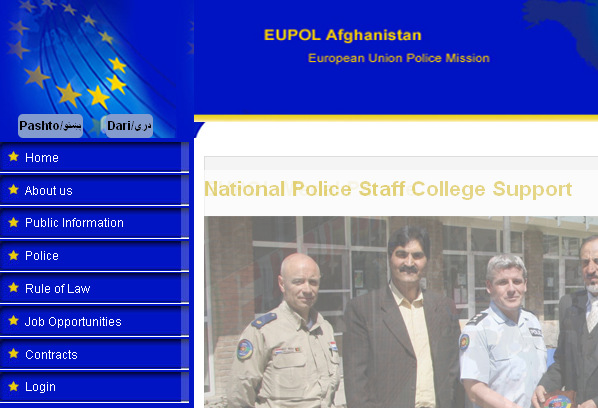
It is important to recognise that while the UN is clearly the lead agency in international development, it is not the only institution to take on a postwar reconstruction mission. The EuPol mission has to be one of Afghanistan’s unsung success stories.
Since 2007, EU nations have been supporting the establishment of a new civil police force and a sustainable criminal justice system. The most vital element of this mission – different to the military one – is that it has ‘Afghan ownership’. As well as supporting key institutions, EU police officers mentor, advise and train Afghan personnel towards becoming part of a trusted police force that upholds the rule of law and respects human rights.
The UK’s contribution to EuPol is a tangible outcome of DFID’s operational plan for Afghanistan, which recognises that improving security and political stability is one of the country’s top priorities.
But for reconstruction to work in Afghanistan, we must learn lessons from past missions – good and bad. Postwar humanitarian assistance succeeded in Kosovo, where a swift multi-nation UN mission helped and resettled displaced refugees. But the mission in Iraq failed because the US Office for Reconstruction and Humanitarian Assistance focused to closely on finance and infrastructure. Both cases starkly illustrate that the most precious currency in a post-conflict world is the people themselves.
The departure of international forces in 2014 may make the end of the conflict, but it should not signal the end of the mission. Afghanistan will continue to need our support – politically, financially and strategically – for years to come.
Another of DFID’s key objectives is to improve the quality of life for ordinary Afghans. Today, over five million children attend school and more than a third of these are girls. Women now make up one in four of country’s teaching staff, while around 85 per cent of the population now has access to healthcare compared to just 10 per cent at the start of the conflict.
While DFID’s objectives continue to be met in the short term, we owe it to the people of Afghanistan to make sure we plan, and deliver, for the long term too.
—————————————————————————————
Jordan Newell is chair of Colchester Labour party. He tweets @JordanNewell
—————————————————————————————
Support for action on women’s rights in Afghanistan should be a priority for the UK – there has been progress on this in the last 10 years but it now hangs by a thread. ActionAid has costed the implementation of existing plans to tackle violence against women in Afghanistan at $90 million over 5 years – a comparative drop in the ocean. Hopefully donors at the Tokyo conference this Sunday will commit to providing this money. You can read the report on this costing here http://www.actionaid.org.uk/103276/short_changed_afghan_womens_lives_on_a_knife_edge_as_violence_ignored_says_actionaid.html