
Stephen Twigg and Jim Murphy have had the germ of a good idea in speaking of a role for the military in our schools. However, there is nothing that the military can deliver that well-organised sport cannot.
All the things that the Combined Cadet Force offers are readily available through sport: discipline, structure, leadership, teamwork, a sense of belonging, the value of delayed gratification, trust offered and expected in return, the importance of rules and boundaries. We learn how individual ambitions can be realised in service of the needs of the group. We learn how to think clearly under pressure, how to take risks, exercise resilience and practise endurance.
The coalition’s proposals for UK School Games are on the right track but when they scrapped School Sport Partnerships they also cut off at the knees the means by which their idea could be carried forward. UK School Games would have improved SSPs and would have been the next logical step as they matured.
However, if we really want to get the nation more active and productive, we need to think more long term and insist these habits be ingrained as early in a child’s development as possible. Stephen Twigg was right to say we need to raise the status and standard of early childhood care, and a crucial part of that is encouraging first-rate people into the profession. In communities of deeper social deprivation, this means actively recruiting significantly more men to fill the need for positive male role models in areas where there is a propensity for absentee fathers.
Some maintain that Britain’s public schools are the global example of best practice in education and their model for ‘co-curricular activity’, while not the whole answer for state schools, would be a significant step in the right direction. Until I started working in a public school I had never set foot in ‘that world’. It was an eye-opener. I came to realise that not for nothing over the last 170 years have public schools regarded organised sport as central to the successful development of the whole child.
As teachers, when we contributed to the school’s ‘co-curricular activities’, so our teaching schedules would be adjusted and reduced. Many teachers in all schools across this country devote their time irrespective of concessions made to their teaching workload, the difference being that in independent schools, it is institutionally encouraged to a much greater degree.
As a teacher in a public school I was hired as much for my hobbies and interests as I was for my subject specialism. I was expected to indulge my love of sport and to light a fire under as many young people as I could. It was part of the culture and, as far as I was concerned, one of the perks.
For every story of inspirational sports coaches, however, there are equal examples of a drama or music teachers that have unlocked talent and nurtured it. Whatever the activity, we want large chunks of every child’s development devoted to activities that they enjoy, that they have a gift for, and, crucially, that are of their own choosing. What I am arguing for is a recalibration of expectations on students, teachers and parents – a change of culture, and a sharing of ideas.
Moreover, of all my former colleagues in both state and private education, I was the only one that had worked in both sectors. That cannot be right. There is almost no cross-pollination of ideas or sharing of best practice. These sectors are working in silos and that must change.
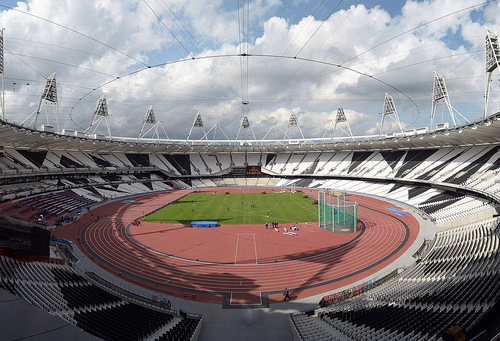
There is so much to do in all schools across the country, not just in areas of social deprivation and not just in the shadow of the Olympic stadium. Only when we finally invest it equally into every three-year-old in the country, will we start to see the social mobility that is in the interests of all political persuasions.
—————————————————————————————
Photo: Department for Culture, Media and Sport