
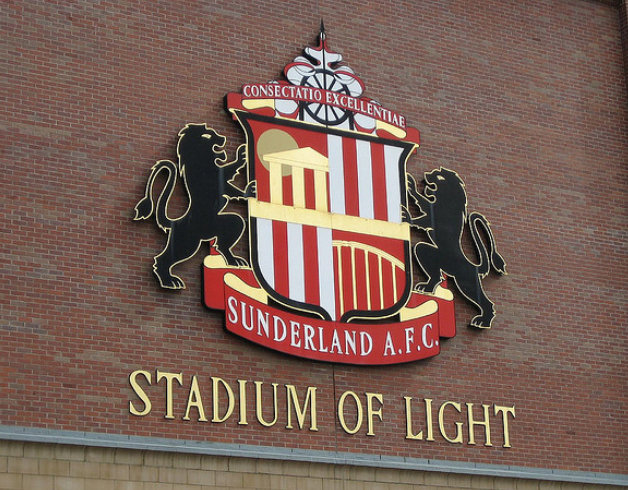
David Miliband waited until he was almost out of the door to remind us all why we loved him. A simple statement on his website: that he would, not, as he had said before, be continuing his relationship with Sunderland Football Club, for the simple as vice-chair of the Sunderland board, for one simple reason: the new manager, Paolo Di Canio, is an admitted fascist.
Some of Di Canio’s defenders will say that he is not a racist, and this is true, if not especially comforting. I see the loss of my civil rights as an unpleasant experience regardless of whether they are taken from me because of the colour of my skin or the tone of my politics, and I’m reassured that Miliband agrees with me.
But it was a reminder, too, of something more important than how we feel about Miliband. It was a reminder that there is – that there must be – life after David Miliband, because while the elder Miliband may no longer be with us, Di Canio is still very much the manager of Sunderland Football Club. If you are not particularly interested in football, the political predilections of a recessional club in the north-east may not seem particularly important to you; but for a very great number of people, the behaviour they see exhibited at football matches or on the television sets the standard for what they believe to be acceptable behaviour outside of it, so what happens at Sunderland matters a great deal.
I don’t think it’s a coincidence that monkey chants aren’t tolerated in English football but are a commonplace event in Italy or France, and that ethnic minorities feel less welcome and are less safe in Italy or France than they are here. I don’t think that it’s unrelated that I felt, as a black man, safer in London than I did in Milan. We’re five years on from the worst recession since the Great Depression; an economic calamity that preceded a political tragedy. There’s never been a more important time to stand against fascism.
That doesn’t just mean arguing against those who suggest that Di Canio’s fascism doesn’t matter, or, as Dan Hodges suggests, a boycott of Sunderland, but that means undermining fascism by other means, too. The best thing to give someone to stop them turning to the hard right is a job; the best way for the left to fight fascism is to win the next election and get the economy back on track.
That must now be a fight that happens without David Miliband. That is a significant loss for Labour, but it is not the end for Labour or for Blairism, no matter what some members of Labour’s Better Off Out (Of Office) tendency might think. He was the last of Labour’s giants – there are no remaining figures who could conceivably be headhunted by a charity of global renown, or who would be lauded by a former and a future President Clinton – but he was not the last of the Blairites.
In some ways, Blairism is a misnomer; Tony Blair was its most successful exponent, leading Labour’s best government and becoming the only Labour leader never to be defeated in a general election, but as an attitude, Blairism is far older than Blair. The guiding philosophy – of a socialism that extends beyond Dover, of a political movement that recognises that power is not an optional extra but a sine qua non of left-wing politics – has always been present in the Labour party, and will never be eradicated, no matter how many platforms Len McCluskey shares with Ken Loach.
It will only cease to exist when it has no more monsters to destroy. There is still inequality, there is still hunger, and there is still injustice. Di Canio is still manager of Sunderland Football Club. Miliband helped to point the way. Let’s keep marching.
—————————————————————————————
Stephen Bush writes a weekly column for Progress, the Tuesday review, and tweets @stephenkb
—————————————————————————————
David Miliband was going to have to resign from Sunderland, anyway. He could hardly have done the job from New York. But one hopes that this appalling appointment will finally bring to a head the question of who owns this country’s last great expressions of working-class culture, and last great focal points of local patriotism.
There should be mutual ownership of the clubs by the fans, as in Spain. And there should be municipal ownership of the grounds, as in, now that we come to mention it, Italy. The Americans would never permit ownership of major sports teams by foreign nationals thousands of miles, who knew nothing about the local culture and who cared only about the money. They are right. Nor should we.
The Durham Miners’ Association, which is rightly demanding the return of the Wearmouth Miners’ Lodge Banner that hangs in the Stadium of Light over the former mineshaft, is not short of a bob or two. It continues to put on the Gala every year, and it co-owns the Morning Star, which still comes out as a daily paper despite also publishing its entire content on the Internet. Watch that space.
Meanwhile, Sunderland was part of County Durham in September 1943, when the Durham Light Infantry was part of the army that landed at Salerno, Reggio and Taranto, thereby beginning the liberation of Italy. They were still in Italy on VE Day. That city’s football club therefore has until 3rd September 2013, the seventieth anniversary of the start of the Italian Campaign, to be rid of this person. Or let all hell break loose from the Tyne to the Tees two months later on Remembrance Sunday.