
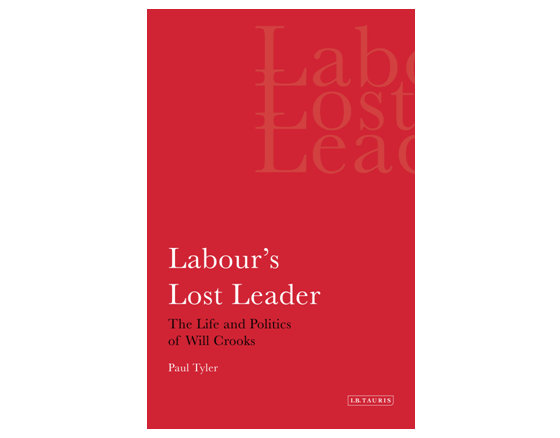
The concept of the ‘lost leader’ is a recurring idea in political history. In 1997, Edward Pearce’s The Lost Leaders: The Best Prime Ministers We Never Had considered the Conservatives’ RA Butler and Iain Macleod and Labour’s Denis Healey. Will Crooks was not, however, a politician who found himself at the top of the greasy pole only to see a rival climb above him. He fits into a different category of Labour movement pioneers.
Crooks was born in a one-room house in Poplar, the third of seven children. His father, a ship’s stoker, lost an arm in a steamship accident. The experience of appearing before the Poor Law Guardians and going into the workhouse had a lasting impact. Paul Tyler charts how Crooks’ work in local politics was shaped by this bitter experience. He became the chair of the Guardians himself: ‘He was known nationally as the man responsible for humanising the Poor Law.’ Tyler points out, with justification, that Crooks’ role in the Great Dock Strike of 1889 has been neglected, with figures such as Ben Tillett, John Burns and Tom Mann hogging the limelight.
A real strength of this meticulous narrative is its attention to the role played by men like Crooks in the late Victorian period, especially at a local level, in raising political awareness about working-class poverty. However, in some – admittedly rare – places, this is overdone. Tyler argues: ‘On the issue of the welfare reform … historians, by default, usually give the credit to Beveridge, a notion that is misleading.’ Yet there is no shortage of historians tracing the origins of the welfare state before William Beveridge. Pat Thane’s acclaimed Foundations of the Welfare State, for example, focuses on events since 1870.
Crooks became MP for Woolwich after a by-election in 1903, taking his case for the poor to parliament. He lost the seat in January 1910, but regained it in the second general election of that year, and retained it until his death. He supported the first world war as he believed it was being fought to defend liberty, and he became a privy councillor in 1916.
Crooks is perhaps best compared with George Lansbury. Both were first elected to the Poplar Guardians in April 1893. Lansbury, seven years Crooks’ junior, served in the Labour administration of 1929-31 and became party leader in 1932. Crooks died in June 1921, just over a month before Lansbury and his fellow Poplar councillors marched to court to answer their summonses in the Poplar Rate Revolt, a mass self-sacrifice that formed a fitting tribute to Crooks, whose life is well captured in this illuminating book.
—————————————————————————————
Nick Thomas-Symonds is the author of Attlee: A Life in Politics
—————————————————————————————
Labour’s Lost Leader: The Life and Politics of Will Crooks
Paul Tyler
IB Tauris | 295pp | £25