
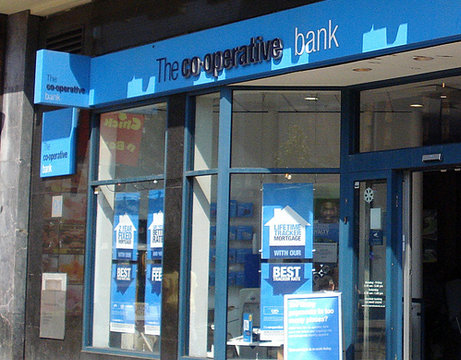
There we were on the Treasury select committee, doing an inquiry into the collapse of the Co-op Bank, just as had been done into Northern Rock and RBS. Chief executives past and present trooped in. They gave their versions of the takeover of the Britannia building society, the decision, ultimately pulled, to try to take over 600 Lloyds branches and how the bank had developed a £1.6bn hole in its balance sheet. On a good day our inquiry might have secured a few column inches in the business pages. Then in walked Paul Flowers, the former chair of the bank.
The Treasury committee didn’t ask him anything about his private life, nor did we know anything about it. But we were concerned about his lack of banking knowledge and specifically his lack of a basic grasp of the key numbers in the bank he had chaired. Only after his testimony did the Mail on Sunday publicise its allegations of drugs, rent boys and the rest. That took the story from the business pages to the front pages.
Since then, of course, the government has announced a number of inquiries with David Cameron desperate to tie Labour’s fate to that of Flowers. But this tells us more about the approach of the prime minister than about the failure of the bank. No one seriously believes that Ed Miliband was not as shocked as everyone else when he saw the revelations about the former bank chair.
The inquiries will pursue their course and will also have to focus on the Treasury’s post-2010 relationship to Co-op expansion (something the prime minister may have been wise to pause on before launching them) but the key questions should be: how did the bank develop such a large capital hole without the regulator calling a halt earlier; how was Flowers approved as chairman when he knew little or nothing about banking – and remember this was after the financial crash; what role did the external advisers to the Co-op play in its expansion; what role did government play in all this; and, finally and importantly, what role can mutuals play in financial services?
The parliamentary banking commission, on which I served, has already called for the replacement of the regulator’s approved persons regime, which rubberstamped Flowers as chair of the Co-op bank. And already from the Treasury committee’s inquiry it is clear that reforms are needed in the governance structures of the Co-op group. Despite the collapse of the Co-op bank, the good principles of mutualism are not incompatible with successful business – there are enough successful examples of mutualism to show that is true – but these principles need to be matched with effective decision-making mechanisms. If there are to be elected lay boards they need to be matched by professional experience, hardheaded choices and prudent use of capital.
The tragedy of the fall of the Co-op bank is that it was supposed to be different but it made the same mistakes as many other banks. The deeper tragedy would be to conclude that because the Co-op bank has had to be taken over mutualism had no serious role to play in financial services.
——————————————————–
Pat McFadden is Labour MP for Wolverhampton South-east. He tweets @PatMcFaddenMP
——————————————————–
” I knows little or nowt about ‘high finances’ [and long may it remain so!] “, said an actor. I remember when a ‘reference’ from a previous employer was taken out, as a matter of course, on ALL employees wishing to apply for work at the Co-op. Who ‘vetted’ Flowers’ application ? A very low paid concierge/night-watchman/cleaner/driver at the Co-op gets a ‘grilling’ from the Co-op’s VERY LARGE & BLOATED H.R./Personnel Dept in Liverpool [ even as far as having their birth-signs checked out — I kid ye not, well done Jon Cainer!]. As to the Chairman of the Board having any references taken out prior to his engagement ? … the ‘Rule’ on ref’ checking should also have applied. The ‘Rule’ applies to both rich & poor alike: “GET [2]recent references telephonically & written.
And a CRB check if working with kids or money.
Was this ‘Rule’ [to reference-check all] conveniently forgotten in Flowers’ case only? Or was it brushed under the carpet due to some close contacts in the banking industry who were old school tie ? The [current] P.M. the Rt Hon D.Cameron, [mahfgr] wants to know where to lay the blame? I agree with the P.M., this is a load of stinking old kippers. But, Dave, may I ask, which personage are you specifically pointing a finger at in ‘THE STABLISHMENT?’ And, btw, who invented the book of Rules on Banking? And how long have we had eccentricity in banking circles? Too long is the answer to the last question. This has been going on in very wealthy&eccentric Banking circles for too long — the ‘Old School Tie’ system negates the need for any reference-checks. Money, at that level [Chairman of the Board] knows no difference between Labour, Tory or Buxfizz. But, THE LAW IS THE LAW. You guys make the LAW & print the rule book – Hansards. Rules — try sticking to them. Where to lay the ‘blame’ [ Politics has always been a ‘BLAME-GAME’ and how to kick the s**t out of your opposition ; [preferably in the bolloxoes & below the belt in downtown Adelaide on a Friday ‘Black-eye’ night]. Do I smell the adviser’s Barbie-sauce here? Wizard of OZ, do I smell you here liberally sprinkling Kangaroo-excreta over the pate de foie gras burgers?
I [vaguely] recall that ’54 movie, an adaptation of Mark Twain’s story about the man given a million£pound note [Greg Peck, Wilf Hyde-Whyte] about BIG MONEY; Twain’s Yankee-inspired message about: ” ‘The English’ and their attitude towards money” : ” It doesn’t matter what you look like, so long as you have money, & plenty of it, Dearie!”
Mark Twain’s view hasn’t changed one iota in UK, Bankers are Bonkers, I contend.
This is my personal view from the pavement, as they say, its Tough@the Top, but its worse in the Gutter. Good Luck you lot at the Banks, but blame no-one but yourselves. Do some reference-checking in future save us ALL a lot of OUR , the Plebs, money !