
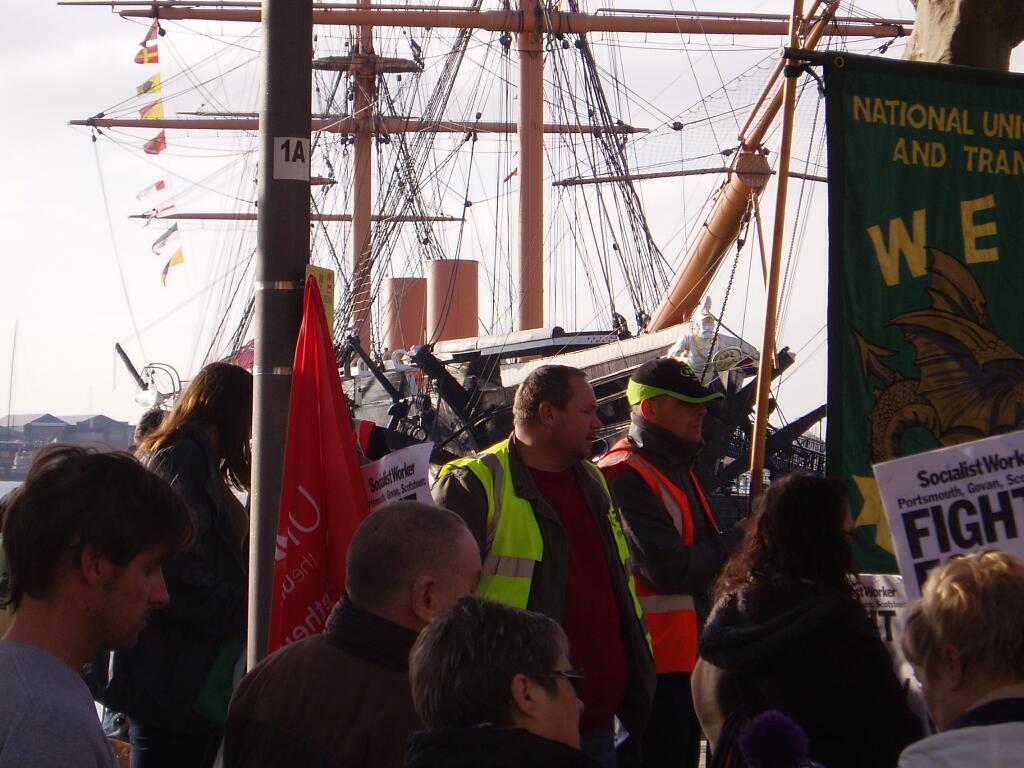
It took a few moments for the true absurdity of the announcement to sink in, but Michael Fallon’s appointment as minister for Portsmouth last week ranks pretty highly in the pantheon of empty political gestures. The end of shipbuilding in England means that Portsmouth, like many cities, faces a range of challenges as it adjusts to an uncertain future. Yet the idea that a part-time minister (Fallon is also minister of state for energy) sitting at a desk 75 miles away is the most constructive way of tackling them neatly encapsulates much of what is wrong with how Westminster approaches politics.
The desire to build and maintain Whitehall-based empires is not unique to the Tories and on one level is understandable. Having scratched and clawed their way into office, no newly minted minister taking command of an army of civil servants and an alpine-fresh ministerial car wants to cede the limited power and influence they have to the provinces. Moreover, local government has been so shorn of autonomy and respect over a generation that legitimate doubts exist as to its capacity to do anything other than collect the bins (and even here the temptation to dictate has crept in).
The problem is that empire building has landed us with a centralised politics that has ultimately left swathes of the public feeling alienated and disenfranchised. Turnout in local government elections is anaemic and faith in parliament has collapsed. Set against this, scrabbling for the chance to wrest back the levers of government in 2015, aside from reinforcing a negative trend, seems to risk condemning our cities to begging for scraps from the table forever.
What is the alternative? There is a range of output that has been released recently[1][2] that highlights how, around the world, mayors not only enjoy levels of popularity that far outstrips that of legislators but are also far more effective at tackling problems than the national governments under which they operate. In the middle-east, the mayors of Tulkarm and Emek Hefer have managed to work across the Israel-Palestine border to tackle the problem of contaminated ground water. In Utah, whilst state legislators posture over who can be the most anti-environment, the mayor of Salt Lake City has just opened a new net-zero public building that produces as much energy as it consumes. And on a global level, the C40 group of leading cities has come together to assert leadership on climate change whilst the Metropolis group of cities promotes a range of initiatives on governance, innovation and sustainability.
Cities are dynamic actors in the global economy as major incubators of innovation and motors of economic growth yet British cities often underperform, lacking the key competences and revenue raising powers they need to direct their futures. Making cities the centre of our politics – through directly elected mayors and a comprehensive devolution of powers – has the potential to create an ecosystem where a range of different policy ideas and approaches can flourish. In short, it’s time that Westminster learnt to let go: Portsmouth doesn’t need a Michael Fallon, it needs a Michael Bloomberg.
——————————————-
Andrew Lomas is a member of Progress
——————————————-
You are wrong and I only need to mention Tower Hamlets to tell you why.
I’m intrigued, but not altogether surprised. Executive Mayors were a New Labour speciality, and a product of the NLGN and New Labour being lobbied by big business to override local democracy, and replace it with a powerful Mayor (far too many who have turned out to be non-Labour loose cannon mavericks) and toothless scrutiny by elected councillors. We should ditch this gimmick now.