
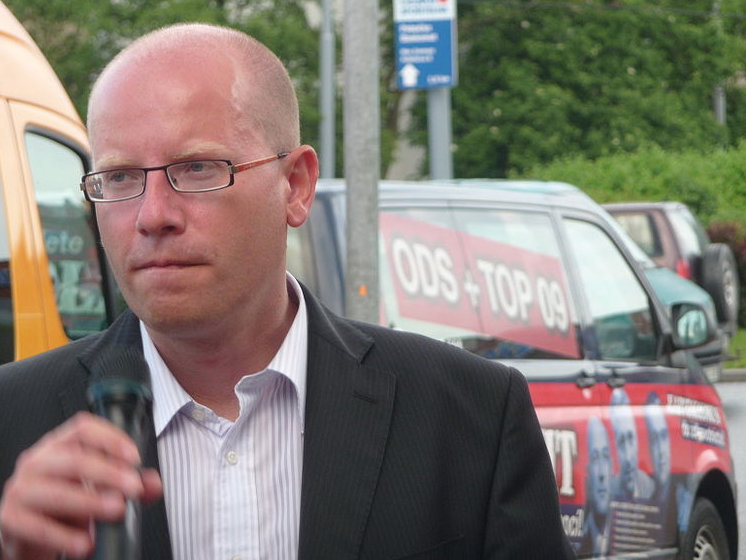
This week in Prague, the Czech social democrat leader Bohuslav Sobotka finally took office as prime minister. Against a backdrop of internal party divisions, a hostile president and a fragmented political spectrum, Sobotka has beaten the odds – both in his country and his party – to make it into the top job. Young, mild-mannered and progressive, the former finance minister is described as boring yet popular and seen by voters as a man with great integrity.
Czech politics is complicated, with politicians switching sides, resigning or forming new fringe parties every couple of years. In 2013, two new parties contested elections for the first time. The ANO, headed by billionaire businessman Andrej Babis, is centre-right party which stood on a platform of tackling corruption, fighting unemployment, and improving infrastructure. The ANO is likely to offer to cooperate with the centre-left coalition Government. Across the spectrum, the SPOZ is a new social-democratic party set by the current Czech president Milos Zeman after he resigned from the CSSD – Labour’s sister party – in 2007. Made up of ex-CSSD members loyal to Zeman, the party has adopted a more leftwing ideology to the CSSD.
The CSSD emerged as the largest party following October’s elections, but it fell way short of the victory margin both its critics and supporters had set it. After a lacklustre campaign, blighted by open disputes and internal divisions, its vote lead shrank from 29 per cent to 25 per cent.
After the elections, CSSD deputy chairman Michal Hasek called on Sobotka to resign, citing the party’s poor performance in the election. But it later emerged that Hasek had held secret meetings with Zeman and his breakaway SPOZ party, in an attempt to stage a coup against Sobotka and get himself nominated as prime minister instead. The deputy leader’s disloyalty sparked huge protests within the CSSD and the wider public and eventually lead to Hasek’s own resignation.
Zeman, damaged by the Hasek scandal and weakened by the failure of his new party to win any seats in the new parliament, had no choice but to invite Sobotka to form a new coalition.
These past divisions not only jeopardised Sobotka’s future, but that of a number of his progressive shadow cabinet ministers. Zeman’s nemesis, former prime minister Vladimir Spidla, was initially ruled out for a job in the new coalition for fear of the presidential veto on cabinet appointments. But Spidla has given the president a face-saving exit, opting for a senior role in the new prime minister’s policy team instead of a ministerial post.
Not to be overlooked either is the fact that this progressive, centre-left coalition replaces a previous government headed by the rightwing Civic Democrats who for a long time have been one of David Cameron’s biggest allies in Europe. The outcome of the Czech general election leaves the British prime minister more isolated in Europe than he has ever been.
The new coalition government is made up of eight Social Democrats, six ANO members and three centrist Christian Democrats, with the coalition parties making up 111 out of the 200 seats in the lower house of parliament. However, this does not guarantee them victory in the traditional vote of confidence that each new government must face. The ANO is a new party – unknown and untested. It could yet pose more problems for Sobotka and his new government.
They say a week is a long time in politics, and we found that out with our own ‘five days in May’ after the 2010 election. So spare a thought for our Czech cousins. After four months of haggling and horse-trading, they are just about there. But with a shrinking economy and the obligatory confidence vote in the coalition still to come, the future for this new progressive government, and Czech politics itself, still looks complicated.
——————————————————–
Jordan Newell is a member of Progress and chair of Colchester Labour party. He tweets @jordannewell
———————————————————