
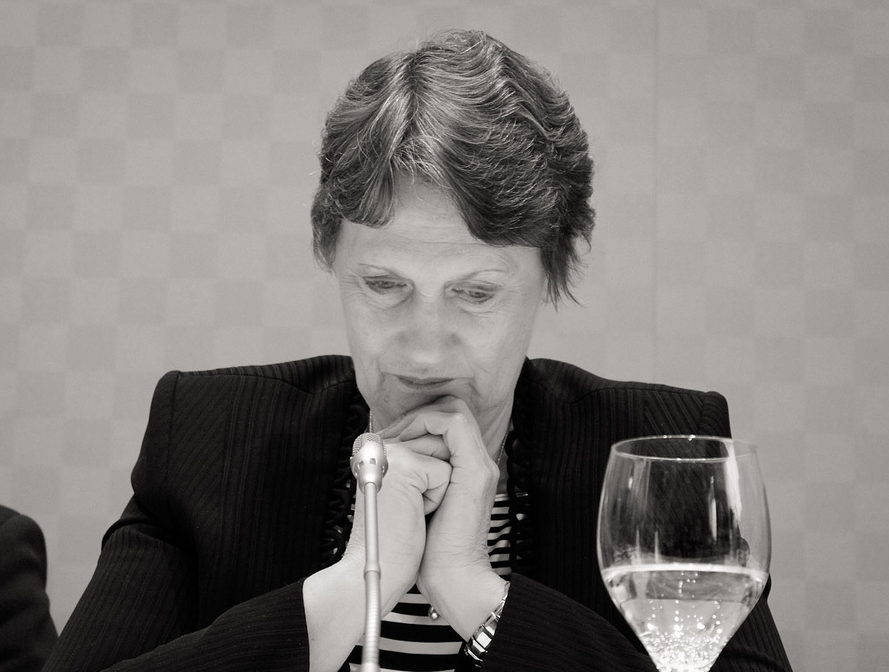
The New Zealand Labour party lost the 2008 general election after nine successful years in office. Helen Clark delivered Labour 34 per cent of the vote, a figure that five years and three leaders later looks more than decent in a parliament where membership is determined by a model of proportional representation similar to that in Germany.
The recent shift to David Cunliffe as leader represents the latest of the post-Clark dilemmas for New Zealand Labour. A Harvard-educated economist and senior cabinet minister under Clark, Cunliffe was soundly defeated in the caucus vote immediately after Labour’s 27 per cent, 2011 general election result which saw it finish almost 20 percentage points behind the incumbent National party government. Another senior Clark minister, Phil Goff had led the party between 2008 and resigned after the 2011 result. The surprise installation of another David, former UN peacekeeper and political neophyte to replace Goff, David Shearer, has since been regarded by many as an unfortunate experiment. He didn’t seem to be able to lift Labour above 32 per cent in the polls and did not master either his message or delivery.
It’s fair to say Cunliffe may never have had a shot at the leadership had it not been for a rule change at the party conference in December 2012 that gave trade unions and the wider party membership a say. Cunliffe became the candidate for the membership, with the active support of the more extreme left. Shearer’s shock resignation (without fighting a general election) in September 2013 allowed Cunliffe the opportunity he needed to prove his oratory and vision and promote himself as the left’s candidate. Shearer’s deputy Grant Robertson also threw his hat in the ring and was soundly beaten 51-33 per cent on the first round of voting, despite having majority support in caucus. The remaining 16 per cent of the vote went to high-profile MP Shane Jones, very much the renegade of the pack, who struck a chord with the public and those who want to see a more pro-development platform in the party.
Far from being an opportunity that drew attention to internal party division, as the system’s detractors had predicted, the new leadership election process demonstrated a Labour party that was prepared to demonstrate internal democracy and one that allowed a contest of ideas, both aspects that had been considered by some to be lacking for many years. The leadership contest appeared to capture the imagination of the media and many in the New Zealand public as the three nominees for leader strutted their stuff at town hall meetings of party faithful around the country.
Despite being billed as an American-style ‘primary’, the process was nothing of the sort. The reasonably small paid up membership of the Labour party and affiliated unions were the only individuals able to participate, not the wider party support base. However, it is impossible to argue the resulting media and public attention was bad for Labour. Cunliffe was undoubtedly the favourite in public opinion polls and swept to victory with just over 50 per cent of the vote. While he didn’t carry the majority with his caucus colleagues, his post-victory, internal soothing is clearly having some impact, and the resulting parliamentary unity is demonstrating a party that could be an alternative government at the 2014 election.
But then there’s the ‘but’. Polling currently has the combined vote of Labour and its leftwing Green party coalition partner almost equalling with the National government, which is scrambling to replace and shore up the reelection of tiny one to three member coalition partners that they currently rely on to govern. National is sitting around 46 per cent with Labour at around 34 per cent and the Greens on 12 per cent. It looks promising on paper. However, prime minister John Key is still hugely popular with the electorate and his party is holding its 2011 electoral support to a similar level. The leadership battle earlier in the year failed to create an enduring rise in the polls, after an initial increase of a couple of percentage points. Labour has failed to win any significant votes off National, rather it appears they have gained from smaller parties. It appears that unless it can gain 3-4 per cent of the vote and whittle the margin to within a couple of percentage points, it will lack the moral authority to govern and that National will do electoral deals to again secure small support partners, giving it the majority it needs to continue to govern.
Tomorrow in the same slot I will look at the challenge that remains for Labour as it contemplates an election likely to be held in the autumn.
———————————————-
Nick Leggett is mayor of Porirua. He tweets @nickoleggett
———————————————-
Photo: UNDP
I agree that Labour leaders should continuously talk about their policies
clearly and keep them in the public focus. as the public memory is short and easily distracted by National’s muckraking and PR stunts.
Keeping our policies in the minds of the electorates is the key, not Key..