
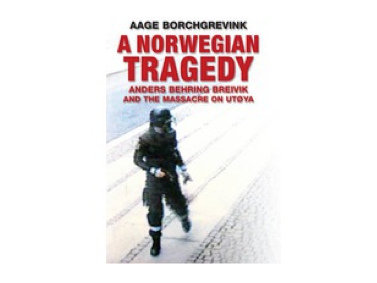
This book is a cry of pain from Norway. It is not a sensationalist or even terribly full account of that day in the summer of 2011 when Anders Breivik bombed the centre of Oslo and then drove to a holiday island where he killed 69 young political activists. Instead it is an agonised scream from a good and tolerant society horrified it could produce such a monster.
We learn in this book as much about Norway and how the country sees itself as about Breivik himself.
Anders Breivik was a strange child. He was so odd, and the relationship with his mother, who was bringing up him alone, so dysfunctional, that social services in Oslo were asked to intervene.
Mother and child were admitted to a family unit on his fourth birthday. There he was described as a ‘divergent’ child who was highly articulate but unable to express emotions. Social workers were worried enough about him to want to take him into care. In the end they didn’t.
Breivik as a teenager got into trouble spraying graffiti and tried to join gangs. He became an awkward adult who had not really grown up, and made a lot of money selling false academic qualifications over the internet.
Aage Borchgrevink intersperses his story with cod psychology which breaks up the narrative. He also attempts, without huge success, to link Breivik’s behaviour with far rightwing groups and ideology. The trouble is that, although Breivik wrote his own lengthy manifesto and was in touch with extremists, he was a loner who never connected enough to become part of any group, even of computer gamers. Although his attacks were without doubt politically motivated, he acted alone and belongs equally to the tradition of violent young men who go on shooting sprees in schools and university campuses.
The most interesting bit of the book is the second half when Borchgrevink describes the massacre at the summer camp on the tiny island of Utoya. A kind of political Woodcraft Folk camp, it is where generations of leading young Norwegian Labour activists go to sit round campfires, bond and discuss politics, a kind of cosy communal Scandanavian idyll totally alien to someone like Breivik§. Prominent Norwegian politicians come to visit, and Breivik’s original intention was to behead Gro Harlem Brundtland, Norway’s first Labour woman prime minister. He was going to film this and put it on the internet, but she left the island before he arrived.
It is in this part of the book that you glimpse something else about Norway today. Breivik came dressed as a policeman. The young Labour leader Eskil Pedersen fled the island just as the massacre was beginning. He took the only ferry out alone, thinking Norway’s Police Security Service had launched an armed coup. He has been vilified since for deserting his compatriots. Borchgrevink agonises too about why other future political leaders, when they realised what was happening on the island, did not fight back. ‘Norwegians are taught not to confront violent people, but to inform the police and that is what the AUF members did,’ he writes.
A Norwegian Tragedy is a very unsatisfying book. An Anglo-Saxon writer would have told the story straight. Borchgrevink is a journalist by trade but an anti-sensationalist by conviction. At the same time he is too close to events to give us a detached analysis of Norwegian society. Edvard Munch’s The Scream hangs in Oslo’s National Gallery, and this account in its roundabout way is no less agonised.
———————————————-
Sally Gimson is a journalist, a Labour councillor, and reviews PMQs on Progress. She tweets @SallyGimson
———————————————-
A Norwegian Tragedy: Anders Behring Breivik and the massacre on Utøya
Aage Borchgrevink
Polity Press | 300pp | £20
Good review Sally.