
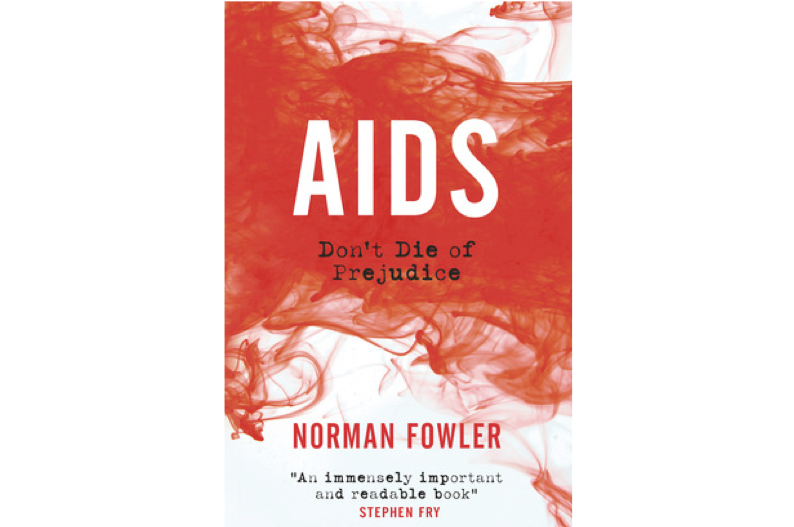
Medical advances, access to retrovirals included, mean that death is no longer imminent to anyone diagnosed with HIV/Aids, yet 36 million people have died of Aids, with as many as 1.6 million people dying every year. Sub-Saharan Africa, India and China have the highest concentration of infections, with heterosexual sex providing the main channel of infection. It is prejudice that impedes further advancement, says Fowler, in particular prejudice against lesbian, gay, bisexual and transgender people, those who inject drugs and people who are involved in the sex industry. These prejudices are barriers to further advances and therefore to the prevention of avoidable deaths.
As health secretary, Fowler led the HIV campaign in the United Kingdom in the 1980s. It is fascinating to read his account of the objections raised by the then prime minister and other cabinet colleagues to the campaign. Fowler reports their objections to the sexually explicit messages towards protection, preferring instead to have morally loaded directions on behaviour. He argues that explicit sexual – practical advice – is what worked with soldiers during war in relation to venereal disease and he based his approach on this evidence. He won that argument in the UK.
Fowler’s book draws on visits he made to nine cities, which he considers ‘the future’ – Moscow, Cape Town, New Delhi, Geneva, Entebbe, Kiev, Sydney, London and Washington. More than half of these are in the Commonwealth, in which 42 out of 53 member states criminalise same-sex sexual activity. Having led rights work there, I know too well the prejudice that exists towards LGBT people, and their friends, in such states and have elsewhere referred to this as poisonous. The risks of being discovered as LGB or T include ‘corrective’ rape or the risk of the death penalty. Health workers have to plan with great care how to provide HIV services, including under cover of darkness, knowing the danger that can follow if information gets out.
Fowler’s prescriptions for better ways to address Aids is very much in line with policy recommendations coming from health and legal practitioners. They include a greater tolerance of drug use and decriminalisation of people in the sex industry, the provision of sex and relationship education and more and earlier testing. He also calls, unsurprisingly, for better funding of this area of work.
Fowler identifies Sydney as the pinnacle of good practice: a city which has a tolerant context for addressing HIV and Aids. Oddly, in the same chapter he notes an increase in cases there. For someone whose core argument is about strengthening the evidence base of policy interventions, this is a troubling contradiction that is not analysed but is left hanging. For anyone who is not convinced of the policies being promoted here, this sadly leaves a methodological muddle that can provide grounds for critiquing, or opting out of, the policy recommendations.
The book is an easy read and probably most valuable to newcomers to HIV issues – much of the content will be familiar territory to those engaged in HIV work.
———————————————-
Purna Sen is Labour’s parliamentary candidate for Brighton Pavilion
———————————————-
Aids: Don’t Die of Prejudice
Norman Fowler
Biteback Publishing | 304pp | £10.00