
Almost every week I seem to come across a story in the press about some super executives and their mega-salaries, which are meekly justified by their board members who insist that they are worth. The myth is that some sort of battalion of superstar executives is driving the recovery. The reality I feel is somewhat different. This is not a recovery led by the genius of these superstars but by working people from the ground, the vanguard of which are the self-employed.
According to the Office for National Statistics’ monthy Labour force survey, self-employments accounts for almost two-fifths (38 per cent) of new jobs since 2010 and the self-employed make up almost one in six of those in work. Indeed the RSA recently reported that the number of people working as self-employed is set to outstrip those working in the public sector by 2016.
Unfortunately, unlike our battalion of superhero executives, the self-employed have not fared well in the cost of living crisis since 2010. According to analysis from Labour, their incomes have fallen on average by £2,000 a year. None of us in regular employment have done that well, with incomes falling by nineper cent but for the self-employed it is a fall of 14 per cent.
Labour has had to do its own analysis because the ONS figures do not include it, so Rachel Reeves and Chuka Umunna have written to Andrew Dilnot, Chairman of the United Kingdom Statistics Authority, to ask him to examine whether new measures are needed to fully take into account the earnings of self-employed people.
The world of work is changing with this growth in self-employment, which includes those setting up traditional businesses as well as those working freelance. Springing up all over the country are a large number of workspaces or hubs where the self-employed can come and work in a collective workspace. Today Rachel Reeves and Chuka Umunna are visiting one in Camden.
Some, I know, bury their heads in the sand and insist that there should only be permanent full-time jobs for everyone. Though people can support that sentiment, the reality is that people have lost faith in many of our institutions and the ability of business to provide them work and so are moving towards self employment for both economic and personal reasons. I met people at one of these hubs who said yes they would like permanent employment, but that they are working for themselves because there are not any jobs. Yet, they noted, they feel ignored by policymakers who only pay attention to the margins of what they do by just focusing on those abusing self-employment for tax avoidance or those being exploited by being forced into self-employment. They want recognition, as they feel like the forgotten middle who are marginalised and outside the system. They are not employees, so the unions tend to see past them or even see them as a threat. They are not all super rich – the statistic show quite the opposite – and many need to interface with the benefits system.
The Tories do not get it. The new universal credit will create huge new burdens for those self-employed people who receive benefit payments, requiring them to report on their income each month, rather than once a year, and using a completely different accounting system to that used by HMRC meaning that each individual will be expected to prepare two different sets of accounts each month.
Labour does get it. It realises that business is not just the board of FTSE 100 companies and that the worlds of business, employment and work do come together, especially when thinking about the self-employed. So it is good to see Rachel Reeves and Chuka Umunna working so closely together today and also with Stephen Timms on employment and with shadow small business minister Toby Perkins.
Umunna has said of the self-employed that their ‘entrepreneurial spirit should be encouraged, but worryingly under the Tory-led government the situation has gone into reverse as we have seen self-employed people hit hardest by the cost-of-living crisis’ and Rachel Reeves says ‘ministers must rethink their plans to hit the self-employed with unnecessary red tape under new universal credit rules.’
The self-employed need to be empowered to engage in business but also need to be able to interface seamlessly with the benefits system. The self-employed should not be the forgotten middle that they are under the current government. All indications are that under a future Labour government they will be the subject of their own policy agenda and recognition by the government as being a key constituent in the economy. Next month the Labour Finance and Industry Group will contribute to this debate by publishing its report on freelancing in a progressive economy.
While health, education and public services will be crucial issues at the next election, to win Labour will also need to continue to communicate with this growing army of self-employed people and small business owners that it ‘gets it’ and by doing so should not be afraid to place the issue at the centre of its manifesto.
———————————
Philip Ross is a member of the Labour Finance and Industry Group and co-author of their report ‘Freelancing in a Progressive economy’, due to be published in September
———————————
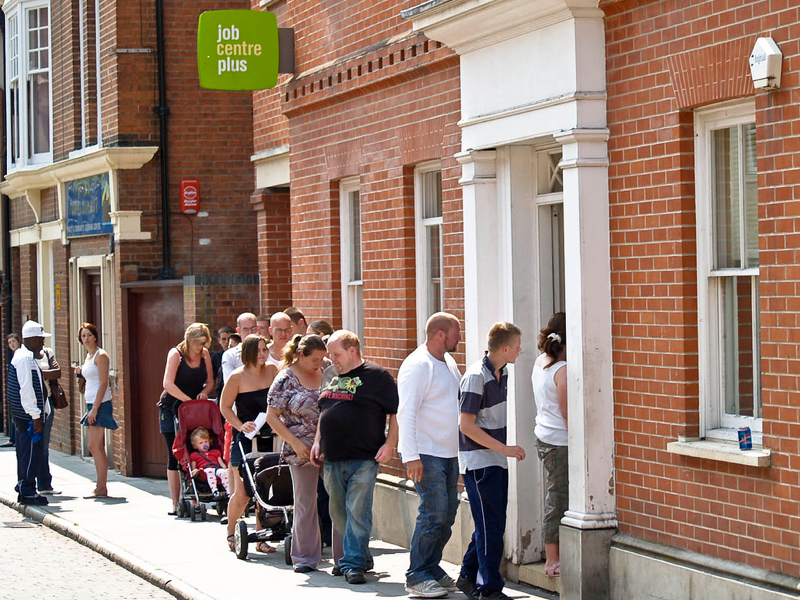
Photo: J de B
Although I welcome the attentions of the shadow front bench to people like myself who are self employed. I still don’t see any initiatives that might make a pitch to attract us as voters. Yes, standardising the interface with HMRC and the benefits system is helpful, but many of us have no relationship with the benefits system and neither are we likely to have even if we generated no personal income at all. I’d like to see trades unions making a pitch for the self employed by offering attractive pension opportunities and social insurance and investment policies that the self employed can cheaply buy into. Local councils could be encouraged to become more involved with the self employed or small business hubs that exist. Some of the present facilities appear to offer little more than glorified wifi access and expensive coffee. The fees to become members of these communities can be prohibitive. I’d like to see more cheaply available accountancy and book keeping support. Perhaps council tax discounts could be available to those starting up, after all the alternative is registered unemployment where at least one could expect to receive something close to a 100% council tax subsidy.
“Too many bureaucrats, too few people doing the work” (Bagrie ’08)
“Workers of the world Unite, you have nothing to lose but your chains” (K. Marx 100 odd yrs ago) – who is left to sell to? where are the market places these days? Instead of encouraging student busking, we kick ’em in the pants and ticket them into the soup kitchen.
Bureaucratic red tape is strangling this place – I am certainly no Tory voter, but at least Yorkie Picles has the right idea on jobsworths and parking fines. If he were Labour, I would vote for Pickles, he takes no prisoners and speaks his mind, giving very little time to idiots that surround him in droves at Tory HQ.
Motivation is the key with any new business start-ups. And an overdraft facility. When [I] see a statistic: 85 people have more wealth than the poorest 3 billion, and the sneering tv Dragon’s Den quartet of millionaires deriding an dmocking the aspirant self-employed, and parading their cash banknotes [like some rich footballers and golfers do on U-Tube] on prime time TV, it makes me want to throw up. How can you expect a sole-trader, fruit merchant/retailer to compete with the likes of, say, Tesco, who write off millions per year just on a few thousand old airconditioning plant and a dozen old BMWs a month?
Back to the drawing board this [above] is a half-baked plan.
Self Employment is not about earning fantastic wages, more often than not, it is the only way to work.
It was first through neccessity and then through choice, that I have for the majority of my working life been self employed within the construction industry, and also a paid up union member. As more and more people take up self employment, maybe the unions should become more self employed friendly, (Agreed with JK Comments), likewise local authorities, we see HS 2 & HS 3 in the headlines, what about providing start up premises, accounting support, health and safety and staff training support not just for 3 or 6 months but for 3 years, giving these small businesses a chance. OK they all may not succeed, but at least if Goverment tried, there whould be little room for recriminations from those paying taxes.
Instead of battling with each other maybe Labour and the Unions could find some common ground and start to rebuild this great country before it is to late.
More often than not in the constructuion industry, these small businesses are individuals, who through no fault of their own find themselves self employed, yet if they are fortunate enough to get a decent job on a long and probably Goverment subsidised contract, they have to look over their shoulder for HMRC and IR35. Don’t the politicians know that large companies will just dispense with these individuals at the first sniff of the Revenue.
The self employed or not tax avoiders, they are tax payers and spend their earning in this country, except for maybe two weeks abroad.
The only loyalty large companies have is to their shareholders, let the working man sell his labour’s to the highest bidder.
As noted int he article, I think the self employed and small business agenda needs to be at the heart of the Labour manifesto and it needs to be able to articulate as a positive vision.
The interface with the benefits system is a symptom of the problem, the real issue is about recognition of the role that the self employed and freelancers as a subset of those play in the economy.
Our forth coming report from LFIG on freelancing is the result of meetings with freelancers, precariat workers, trade associations and trade unions. It will be published in September and I will ask Progress to run a story around it to keep you in touch and keep this whole, important debate going.
We should certainly recognise that employment is increasingly casualised.
Hi Philip Ross, also the ‘minimum income floor’ for the self employed is about to close one million businesses – here’s an article with more details http://www.jamesbickle.co.uk/2015/04/secure-people-dare.html