
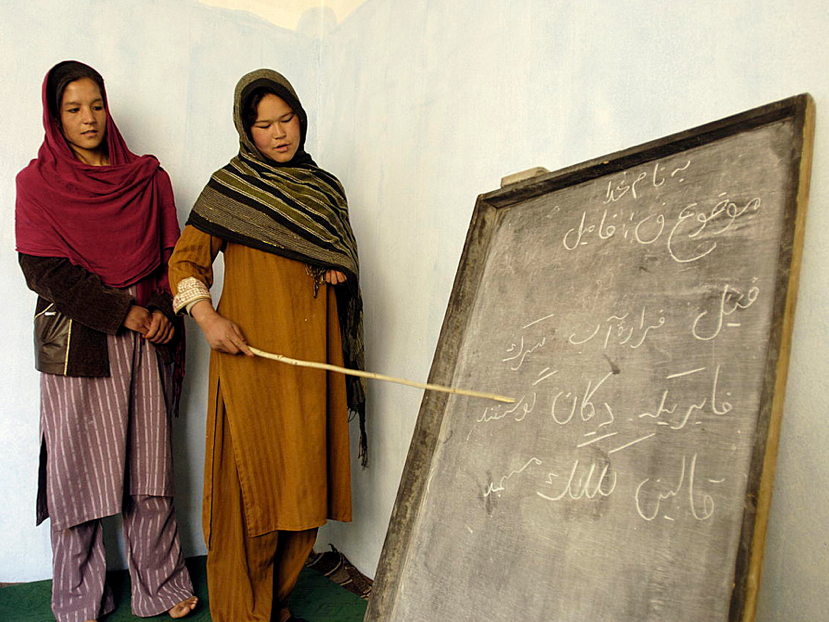
Last week, world leaders from Nato member states gathered in Wales for the 2014 Nato summit. While Ukraine and ISIS were high on the agenda, so too was the ongoing withdrawal from Afghanistan. As Nato winds up its 13-year long commitment to the country, the United Kingdom’s involvement will undergo an important transition. Nato’s secretary-general, Anders Fogh Rasmussen, promised that allied nations would honour their $4.1bn goal for funding the Afghan security forces. However, final decisions cannot be made on Nato’s role in the country until the results of the disputed election are made clear.
Having been a military actor in Afghanistan for over a decade, the UK’s engagement will switch from military priorities to being focused almost exclusively on development and diplomacy. Disappointingly, this conference committed the UK with its Nato allies only to obligations concerning security and defence, and not human rights.
This is a critical issue that must not be overlooked. As we approach this juncture, it will be important to think about how we can protect the human rights gains that have been made. This is particularly urgent with respect to the rights of women and girls.
Despite our changing role, our ability to shape events in Afghanistan will still be significant. As one of the country’s largest donors, we have the opportunity to play a key role in contributing to progress on the ground.
The past decade has brought with it strong momentum for Afghanistan’s women and girls, and has produced gains that are far from negligible. In terms of political representation, access to education, health care and employment, and legal norms regarding violence against women and girls, real progress has been made. This is owed to women’s rights activists and community leaders, who have worked bravely with the backing of the international community.
However, there is still much to be done and many dangers lie ahead. The price that women’s rights defenders pay to speak out for change is still incredibly high, and continues to endanger their lives. And though Afghanistan has a much-improved legal framework for protecting women’s rights, its implementation has been slow. Women are still suffering violence with impunity in many parts of the country.
Perhaps most alarmingly, the 2009 Elimination of Violence Against Women Act, which criminalised rape and forced marriage in Afghanistan, is under threat of repeal. Last year it was nearly scrapped by the Afghan parliament before the speaker intervened and stopped debate. Even if EVAW survives, because of the failure to reform traditional justice mechanisms and create a reliable nationwide court system, implementation of it has so far been very weak. The UK and its allies must ensure that any aid given to the yet undetermined new government of Afghanistan upholds this law.
The Labour Campaign for Human Rights supports Jim Murphy’s commitment for human rights to be put at the heart of the UK’s development policy, which means that in places like Afghanistan the way women are treated should become an important consideration in how we construct the development partnership. Countries that systematically violate human rights should not be able to assume steadfast development support from Britain.
Murphy has suggested that every country the UK gives aid to should be subject to an annual human rights audit and regular monitoring. In Afghanistan, this means that things like repealing EVAW would bring up a red flag and make us look again at the partnership.
Of course, we must make sure ordinary people, including victims of human rights abuses, do not lose out because of the bad policies of their governments. But we should be prepared to use the tools at our disposal to protect those people against policies that harm them. A balance must be struck, with the aim being to ensure our role does the maximum good.
In Afghanistan we must keep our role under careful review as we enter this new phase of engagement. Both our international obligations, beginning with UN Security Resolution 1325 which aims to protect women and girls in conflict, and our reasons for going into Afghanistan in 2001, require us to continue to take responsibility for the situation of women and girls there.
For the Labour party, there is a special responsibility. Not only does our strong commitment to gender equality here in the UK need to be echoed in the way we approach our international relationships, but we also took Britain into the war in Afghanistan. Our party has a particular concern with Britain’s Afghan legacy. Hundreds of courageous British soldiers have lost their lives there and we have spent time, great effort, and resources to bring the country a better future. We must use all possible levers of influence to realise that future, especially for the women and girls of Afghanistan who are counting on us to stand with them.
———————————
Maria Holmblad is a campaigns officer with the Labour Campaign for Human Rights
———————————
Photo: United Nations Photo