

Matthew Doyle examines the names in the frame for the next Democratic presidential nomination
November’s midterm elections in the United States generated bad headlines for the Democrats because the loss of the Senate means Barack Obama will struggle to get any legislative governing done in his last two years in post, short of wielding his veto pen on various Republican attempts to roll back his agenda thus far.
But the midterms also represented an organisational and talent setback at the state level that could make the 2016 fight a whole deal tougher for the Democrats, losing governor races in Illinois, Maryland and Massachusetts. Indeed Democrats now only control 17 of the 50 states and none of the significant battleground states such as Iowa, Florida or Ohio.
That means fewer Democrat hands on the organisational levers of power and fewer politicians able to build a profile to be Obama’s successor.
Contrast that with the Republicans who have a bench of over a dozen governors ready to run for the White House.
The Democrat bench is much more dominated by former or current senators from Hillary Clinton herself to John Kerry, Joe Biden, Elizabeth Warren or Al Gore.
With Washington politics having such a low standing with the public, the ultimate insiders of the Senate are always going to find it a tougher sell with the public.
As for sitting vice-presidents, prospects do not look good either. The bad news for Joe Biden is that when George HW Bush won in 1988 he was the first incumbent to win the White House in over 160 years.
And for Clinton – or any Democrat – history also shows that in seven of the last eight presidential elections the other party won after two terms of a president, with Bush the exception there too.
Historically Americans prefer governors, from Bill Clinton to Jimmy Carter, Ronald Reagan to Franklin D Roosevelt, Woodrow Wilson to George W Bush. Indeed no governor has lost a race this century. That is where the Democrats look weak.
The governors in the frame are: retiring Maryland governor Martin O’Malley but he could not get a Democrat elected to replace him; Colorado governor John Hickenlooper who was barely re-elected and Democrats lost the US Senate seat there; 76-year-old California governor Jerry Brown who ran and lost against Clinton back in the 1990s; or New York governor Andrew Cuomo.
The precedent of Obama in 2008 and John F Kennedy in 1960 as senators making it to the White House are not bad names to follow, but both faced challenges from GOP candidates who were even more Washington insiders – long-term senator and sitting vice-president John McCain and Richard Nixon respectively.
Although all the commentators think Hillary Clinton will win if she runs, this is to ignore not just her own loss to Obama in 2008 but the history of presumptive nominees often failing. Obama, Carter, Kennedy, McCain, Bill Clinton, George W Bush, and Mitt Romney were all in one cycle or another the underdog for the nomination they went on to win.
Even among Democrats who want Hillary Clinton to win there is no desire for a coronation.
And although there are various online campaigns, from New York mayor Bill de Blasio through to Massachusetts senator Elizabeth Warren, the only candidate who has formally shown their hand is Navy veteran and former Virginia senator Jim Webb who has take the first step of an ‘exploratory committee’ to decide if he is formally going to run. This follows the standard candidate stuff of a worthy book launch and tour earlier in the year to raise his profile.
There will be different motivations for those who take up the challenge. First, there will be those who will genuinely believe they can win. And they can take some encouragement from the history of presumptive nominees – not least Clinton herself in 2008.
Second, there will be those who run not to win but because they are after the vice-president spot or a senior cabinet spot themselves. Given his experience, a good run and then dropping out to endorse the winner could likely see Webb end up as the next defence secretary.
As ever with political predictions, you never know what is around the corner and the commentator consensus in 2008 was that Clinton had a lock on the nomination. It will be that thought as well as the desire to finally break that glass ceiling of American politics that will be on her mind as she decides if she is ready for another run.
Runners and riders

Joseph Biden
Vice-president, former senator for Delaware
Known to be plain-spoken or gaffe-prone depending on your point of view, Joe Biden is entitled to feel annoyed at the fact that as the incumbent vice-president he is not really being talked of while we wait for Hillary Clinton. But the fact is that he will not run against his former cabinet and Senate colleague, although his scheduling and speeches would indicate he is certainly keeping his options open if she decides against it.

Hillary Clinton
Former secretary of state, senator for New York and first lady
The one everyone is waiting on. Donors and political action committees are on standby. #ReadyForHillary is already organising. Former Clinton staffers are jockeying for position. A successful book tour and solid campaigning in the midterms all went well. Reason not to run? The state of Washington politics and the thought of four or eight years fighting with Congressional Republicans, knowing there will be no love lost in that relationship.

Andrew Cuomo
Governor of New York, former housing secretary
Andrew Cuomo has impeccable Democrat establishment credentials, as the son of a former governor, Mario Cuomo, and until recently a member of the Kennedy family by marriage. He served in the Bill Clinton administration as cabinet secretary for housing and urban development. Like O’Malley, he has supported same-sex marriage laws in his state while in office, and combines being socially liberal with being economically conservative.

Martin O’Malley
Former governor of Maryland and mayor of Baltimore
The name talked about most often as a rival to Clinton, partly due to the lack of Democrat governors, partly because, unusually for a politician, he has never denied being interested in a run for the presidency when asked. Seen as a moderate, his term in office did not end well and he failed to ensure that a Democrat was elected to take over from him.
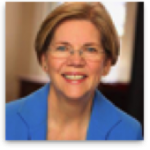
Elizabeth Warren
Senator for Massachusetts, former consumer advocate
The only serious female rival to Hillary Clinton and popular for her work in establishing the Consumer Financial Protection Bureau, signed into law by Barack Obama following the financial crisis. Prior to that she had a formidable reputation as a law professor and consumer protection advocate. She has only been a senator for a couple of years, but so had Obama. She was a popular fundraiser and surrogate in the midterms and will certainly face calls to run, despite her protestations to the contrary.

Jim Webb
Former senator for Virginia, Navy secretary under Ronald Reagan, Marine Corps veteran
As a candidate from a swing state, a maverick, and a Democrat with military experience, Jim Webb will gain attention and interest, but his ability to carry Virginia may be hampered by the fact that he only served one term. A successful run will more likely end up with his consideration as pick for vice-president or defence secretary. Expect an anti-Obama campaign.
———————————-
Matthew Doyle is a former adviser to Tony Blair
———————————-
Candidate photos: taken from potential candidate websites