
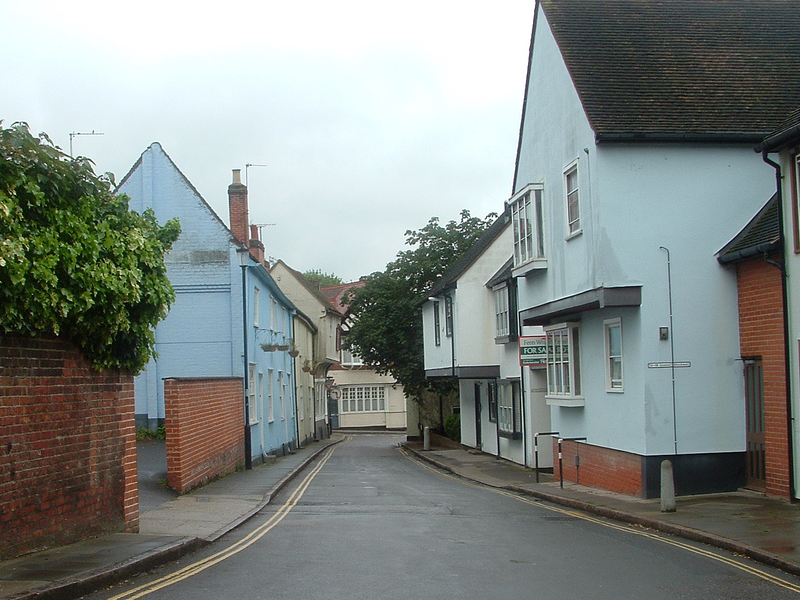
Colchester is Britain’s oldest recorded town, with a history deeply rooted in the Iron Age. But it was Roman invaders, Viking settlers, Normans conquers and Flemish merchants who built the Colchester we know today.
I believe these basic historically facts should be remembered when we talk about immigration.
In 2012 David Cameron promised to tackle immigration, but he has failed to deliver. The Office for National Statistics revealed this month that net migration rose by 42 per cent last year – almost three times the prime minister’s target. Every quarter, the migration figures shred Cameron’s reputation a little bit more. A failing immigration system, presided over by a failing prime minister.
An important part of this debate, for me, is the impact that immigration can have on local communities. People worry about the impact on local services or infrastructure, and some even fear a loss of identity. And while it is important that we listen and respond to the concerns of voters, we must recognise that this is not a debate unique to Britain.
I witnessed this debate during a trip to southern Spain last year, where British, German and Italian expat enclaves in the Costa Blanca are growing fast. British expats are buying up retirement homes at the expense of local young people, 30 per cent of who are out of work and unable to get on the property ladder. Expats are descending on the Spanish Costas to open bars and businesses. As a result, local people experience the same apprehension about the impact on their communities as we do here in the United Kingdom. To have an informed debate about immigration, we need to factor in the 2.2 million Britons living and working in the other 27 European Union countries.
Colchester was built on the positive impact of immigration, encapsulated in our famous ‘Dutch Quarter’ – which became home to a large number of weavers and cloth makers from Flanders during the 1600s. Their production of the famed ‘Bays and Says’ cloth brought jobs, trade and other economic benefits to Colchester, and to Britain as a whole.
Over 500 years later, we are still seeing the positive effects of immigration. According to University College London, European migrants have contributed nearly £20bn to the UK economy since 2001, and statistics show that economic migrants are less likely to claim benefits, live in social housing or commit crime. Despite scaremongering over health tourism and the impact on the NHS, migrants cost the NHS £400 per head less than native Brits, due in part to the fact that they are younger, fitter and of working age.
But Britain needs immigration rules that are tough and fair.
Illegal immigration, primarily through people smuggling and human trafficking, is a growing problem. But cuts to the UK Border Agency by the government means that fewer people are being stopped at ports and airports.
Labour has pledged to learn from past mistakes and control immigration, with people counted in and out at the border, reinstating fingerprint checks at the border and closing down loopholes in short-term visas.
I do not pretend that the last Labour government got everything right on immigration, but we should not forget that it was a Labour home secretary, Jacqui Smith, who swept away the right of naturalisation based on how long someone had lived in the UK and brought in the concept of ‘earned’ citizenship, and introduced the points-based system we have today and that will form the bedrock for Labour’s fresh approach to controlling immigration.
Immigration has brought social, cultural and economic benefits to Colchester. A fact I shall be proud to repeat when I go knocking on the doors of those old Flemish merchants’ house.
———————————–
Jordan Newell is the parliamentary candidate for Colchester and chair of Colchester Labour party. He tweets @jordannewell
———————————–
Immigrants are people who settle here permanently, which means David Cameron chose the wrong metric. Foreign students are visitors provided they can’t visa switch. Asylum seekers are guests, providing the can’t apply for citizenship. People moving round the EU are just free moving, providing they are obliged to apply along with everyone else, if they should choose to settle here permanently and not just have it done automatically. Foreign spouses marrying British citizens can live here with their spouse, without permanently settling, or applying for citizenship. Settlement can be capped without hindering people coming to this country for good reasons. The cap level could be put in each party’s manifesto, so the British public gets a vote on how many people they want to add to the population permanently. I think that will solve most of the negative issues we currently have with immigration.
One of the worst articles I have read about immigration and that’s saying something. For a reasoned debate the must reads are Ed West’s “The Diversity Illusion” and ” The British Dream” by David Goodhart, both upstairs and I might have spelt David’s surname wrong because I’m not going up to check.
Immigration into this country was essentially over by the early middle ages. Hugenots were Protestants who were absorbed within a generation, the later Irish and Jews also assimilated and married in, or in the case of the more Orthodox elements of Jewry, married out.
What we have witnessed since about 1960 is a massive ever increasing arrival of peoples who are different and consciously remain so. Intermarriage is forbidden and wives and husbands are imported from the countries of origin. The now totally discredited doctrine of multiculturalism so beloved the Labour Party, the CRE and the Guardian actually not only discouraged assimilation but paid people not to assimilate.
Whereas Jewish schools encouraged the learning of English and were hostile to Yiddish in Tower Hamlets English was taught through the medium of Bengali! Ridiculous, with the result that there are now a couple of generations who were born here and have difficulty communicating in English.
I spend a part of the year in Spain, speak the language, have a property and business there and know considerably more about the country than you do after a quick holiday. About a million Brits live in Spain the majority owning their own homes having gone there to retire. They have brought capital, pensions and private medical care with them and are not dependent in any way on the Spanish state which in any case provides little in the way of social benefits.
The rest of the article is drivel especially the bit about immigrants after 500 years contributing £20 billion a year to the economy. An Iranian brain surgeon or a Chinese high tech investor isn’t a Somali who can’t and never will speak English or have a job. You however, quite dishonestly, lump them all together as immigrants.