
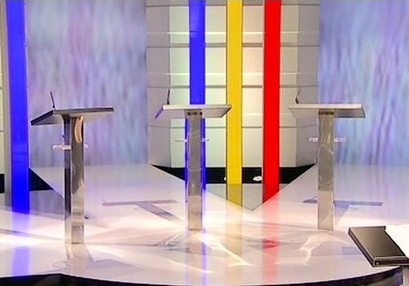
At the last election, David Cameron said he thought the television debates were ‘here to stay’ and that ‘it would have been feeble to find some excuse to back out’.
But yesterday he tried to exercise a veto to block TV debates and deny them to the electorate. He seems to be attempting to run away from his record, and the British public, by trying to dictate who takes part in them in the run-up to the next general election.
He may already have plans to try and buy this election campaign, but these debates are not his to own. They belong in the hands of the millions of members of the public who at the last election watched the three party leaders before choosing how to cast their vote.
That is why when Cameron made his comments yesterday, outside of any formal negotiations with the broadcasters themselves, Ed Miliband responded by stating clearly that it is a matter for the broadcasters who they invite. This is a long-established principle and it is not up to the prime minister to dictate who goes on to national television in the run-up to an election.
There is no doubt that at the last election they proved an important tool for democratic engagement. Nearly 10 million viewers tuned into the UK’s first prime ministerial debate in 2010, and two-thirds of viewers said they had learned something new from them. Younger voters in particular said the debates made them more interested in the campaign and more likely to vote.
It would be a retrograde step if – because of Cameron’s cowardice or calculation – the British public were denied the chance to engage with the choices faces our country in the same way again.
We have known for some time that Cameron has real fears about facing his opponents in TV debates, but this step yesterday has now confirmed that he will do almost anything to avoid taking part in these debates with Ed Miliband before the polling day in May.
I do not believe that any politician should have the power to veto who takes part in what will be vigorous and vital discussions as voters make their choice on who should run our country in just four months’ time.
It is for the broadcasters who are organising and hosting them to make the final decision about who should be invited to take part. And if one of the major parties does not play by the rules, and decides not to turn up, then it is up to the broadcasters to decide whether to simply host the debates without them.
It is an important principle of our national life that it is the broadcasters themselves, governed by transparent codes of conduct, that make decisions about what constitutes fair election coverage. It is not for this prime minister, or any prime minister, to seek to bully them in relation to the coverage given to his opponents.
And it is no good for Cameron to pretend that this issue has just arisen. I said nearly a year ago that Labour was ready to open formal negotiations with broadcasters.
I made clear that for Labour the starting point for talks should be an in-principle agreement to adopt the same scheme as at the last election, using a formula which was approved not just by Labour, but by Cameron and Nick Clegg too.
Cameron has already stated that he intends to dust down the playbook from the 1992 election – widely regarded as the dirtiest in recent memory – and in such circumstances I believe it is important that voters can hear from the party leaders directly, unmediated by the press or distorted by smears.
But the truth is that Cameron is not seeking new terms and conditions. He simply wants to avoid debates. He seems to be claiming that for him the involvement of the Green party in these debates is more important than debates happening altogether.
It is a sign of Cameron’s growing arrogance that he thinks he can dodge this job interview with the British people.
As Labour, we remain committed to having TV debates and we do not want to see any party leader have a veto over whether they happen. The bottom line is not what works for David Cameron. The bottom line has to be whether these debates will help to inform the public’s choice.
———————————-
Douglas Alexander MP is Labour’s chair of general election strategy. He tweets @DAlexanderMP
Well let the Greens take part in the debate. Cameron objection is removed. Lets face it, the greens have more candidates in place than the Lib Dems and if enough people vote for them they could form a government – the least the electorate can expect is a chance to hear what the Greens have to say in a debate – who knows it might put some people off voting green – but excluding them from the debate could turn out to boost their support – have Labour still learnt nothing from the contempt that self-seeking bullying, bickering politicians are held in?
If the bottom line is really “to inform the public’s choice” then base them on the number of candidates for each party.
Point is, OFCOM does not define the Greens as “a major Party.” Also, on a more personal note, they’re unbearable priggish wankers.
“Ed Miliband responded by stating clearly that it is a matter for the broadcasters who they invite.”
So if they invite everyone except Miliband he will be happy with that?
The exclusion of the Greens at the same time as including UKIP is scandalous. Labour should be pressing Ofcom to change its stance and include the Greens.