
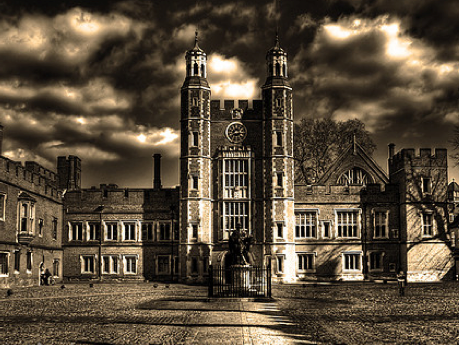
Does it matter what school you went to? There was some interesting research from the Sutton Trust this week on the educational backgrounds of those likely to win parliamentary seats in May. The key conclusion is that the overrepresentation of those who have been privately educated will continue in the new parliament – for both major parties.
Nearly a third of new candidates with a reasonable chance of winning were privately educated – 49 per cent of Conservative candidates and 19 per cent of Labour candidates compared to seven per cent of the population.
Does this matter? I think it does, but not for some of the reasons commonly stated. I have never supported condemning individual members of parliament for the schools they attended. The fact that I went to my local comprehensive is down to the values and judgement of my parents, not me. The same goes for David Cameron’s Eton experience.
What does matter is that it is yet another example of the very unrepresentative nature of parliament. Parliament is the last place where we need establishment ‘groupthink’. A range of background and work and educational experience is likely to strengthen the decision-making and the representative nature of our politics. A parliament which looks more like the communities it aims to serve is more likely to garner respect – or at least acceptance from the public.
This is the reason why I work with Labour Women’s Network to increase the proportion of women elected to parliament. And it is worth noting – despite some sniping about our efforts – that increasing the number of women candidates has brought wider diversity too. Of the women we have trained as parliamentary candidates, only 15 per cent work in politics already, they come from all age groups, 11 per cent are disabled.
There is more work to do on race, but with nine per cent from Asian backgrounds and five per cent black we are nevertheless pushing at barriers which other selection support has not managed to tackle.
Thirteen per cent of our trainees were educated in UK private schools and, while 89 per cent went to university, 54 per cent were the first person in their family to do so.
In the end, though, our politics is not about a focus on the individual traits of politicians, but about the collective difference they make. My problem with Cameron is not that he went to Eton, but more that his government has removed the opportunities for many other families and children through their attack on Sure Start. One of my last interventions in parliament before the 2010 election was to point out the threat to children’s centres around the country from the election of a Tory government. I was roundly heckled by overexcited Tories and yet one of the first actions of their government was to remove the requirement for Sure Start centres to provide childcare. This has had the perverse effect of closing many and leaving others with unused space. Tristram Hunt has announced a neat solution this weekend to reinstate the requirement and to open up the opportunity for other childcare providers to work in the centres. Not only will this increase the childcare available in some of our most deprived communities, it will also help the centres to return to being the vibrant child and family hubs they were always intended to be with access to support for parents and opportunities for children.
We are still waiting for our first MP who used a Sure Start centre as a child, but I am hopeful it will not be too long – that really will be something to celebrate.
———————————
Jacqui Smith is a former home secretary, writes the Monday Politics column for Progress, and tweets @Jacqui_Smith1
———————————