
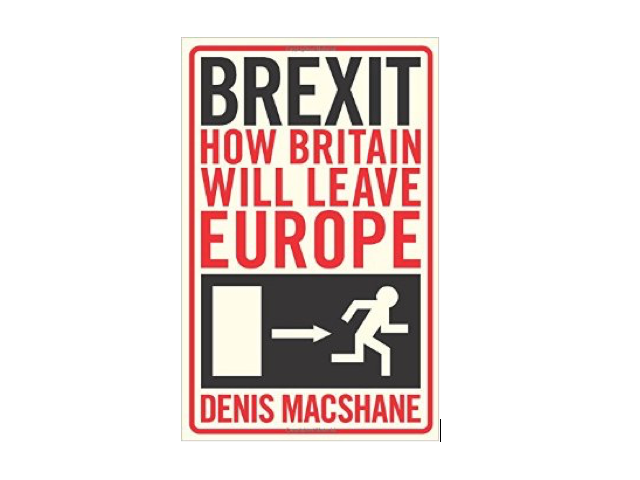
The Scottish referendum campaign gave the British political establishment the fright of their lives. An in-out referendum on Europe in 2017 will be much harder to win as Britain has been drifting towards the exit door for the last 20 years, argues Denis MacShane in Brexit.
MacShane describes how the tentacles of Euroscepticism have reached into every corner of the British establishment. From the City and the BBC, to Whitehall and the national press, anti-European Union sentiment is commonplace. The shadow of Rupert Murdoch looms large. No one should be under any illusion as to how tough it will be to persuade the British people to stay in Europe. In 1976, the City, British business, the media and the majority of leading Conservative and Labour politicians were advocates for ‘Britain in Europe’. That will not be the case in 2017.
There has never been a settled acceptance among both Tory and Labour politicians that Britain’s future lies in Europe. MacShane’s assessments of Margaret Thatcher and Tony Blair’s approaches to Europe are fascinating. He describes Thatcher as Britain’s ‘last big leader on Europe’. Thatcher defied the opinion polls to lead Britain deeper into Europe with the Single European Act before an ill-judged speech from Jacques Delors led her to total opposition to the EU. MacShane does not question Blair’s enthusiasm for Europe or that he played a leading role in the EU, but he is critical of Blair for never being prepared to challenge the Murdoch press or wider public opinion on European issues.
Brexit has its weaknesses. The title is unlikely to encourage a broad readership. Ask a member of the public what is meant by ‘Brexit’ and they will give you a strange look. Creating more jargon to talk about Europe is not what the pro-European cause needs! Surprisingly, MacShane has nothing to say about the voting system and the decline in support for the EU in Britain. The change from a constituency to a list system has been a disaster. Even well-informed people who are active in their communities do not know who their member of the European parliament is or what they do. In a period when distrust in politics and the political class is at an all-time low, one of the few aspects of British politics which voters like is the link with a constituency member of parliament.
MacShane can be condescending; he asserts that Britain is not European because we prefer tea to coffee and have double-decker buses rather than trams! Yet Britain is a much more European society today than when we joined the European Economic Community in 1973. We tuck into pizza and pasta; holiday in France, Spain and Croatia; and enjoy watching Scandinavian dramas and shopping in Ikea. A recent poll for the Observer showed that the majority of young people in Britain considered themselves to be European.
Keeping Britain in Europe will be difficult, but not impossible. What is required is inspired leadership, brilliant organisation and effective community mobilisation. That should provide MacShane with plenty to think and write about for his next book.
——————————
Sally Prentice is parliamentary candidate for North Herefordshire
———————————
Brexit: How Britain will leave Europe
Denis MacShane
IB Tauris | 240pp | £12.99