
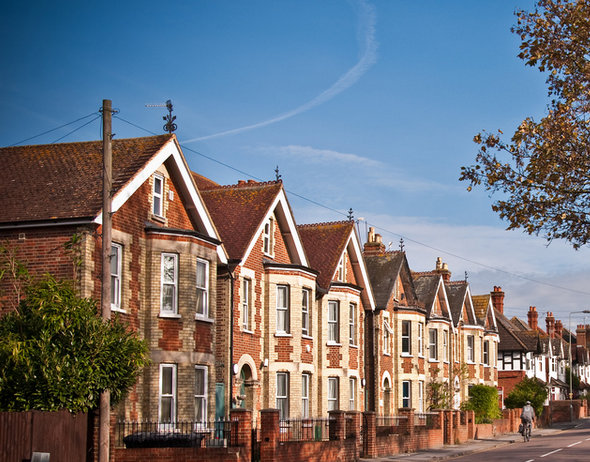
In the next few weeks councils up and down the country will be setting their council tax levels for the next year. Council tax is the biggest tax over which local people have a say. It seems obvious that for a healthy democracy to function local people need to see a link between money raised and money spent – and that means reversing one of the most pernicious of Margaret Thatcher’s legacies: the divorcing of local taxation from local services.
Under our current system council tax currently represents less than 10 per cent of local expenditure, with the vast bulk of spending reliant on central government grant. As the London Finance Commission shows, England is an extreme outlier on devolution compared with other countries because of our centralised structures and the dominance of Whitehall departments over town halls, much of which occurred in the mid-1980s.
But today the sheer degree of Scottish devolution means the political landscape in which decisions about reform this system are very different from they were 30 years ago, and even a decade ago when change were looked at by the Lyons review.
Decentralisation – local spending, fairer local taxes – should be a winning card. The Tories propose nothing more than a bookish debate on English votes for English laws and a status quo tax system which burdens those on modest and middle income and favours the well-off. Labour’s plans to give councils more control over billions of pounds in skills, transport and housing spending represent a major advance but need to go further.
This is a long game. We won’t go into the next election with a sudden announcement on council tax reform, but it doesn’t stop Labour making bolder statements about Whitehall, local democracy and what we mean by ‘decentralisation.’
Both the LGA and select committee on local government are both right to press for a radical new settlement. In the words of Clive Betts ‘If the citizens of New York, Frankfurt and Tokyo can be trusted with tax-raising powers, why not the people of London, Greater Manchester or the north-east?’
A new report by the CIPFA Singh commission into local government finance argues that city-regions such as London, Manchester, Sheffield, Leeds and Birmingham should be given the power to revalue their homes and draw up new bands to take into account changes in property values.
In a soon-to-be-published discussion paper by the New Policy Institute, a different and perhaps more radical route to reform is proposed: a new set of council tax bands and associated tax multipliers (which determine how much the tax goes up from one tax band to the next) rather than outright revaluation. Within this new framework for reform local people could have a say: any decision about whether to reform the system could be taken locally, for the local area only. Want more tax fairness? Then vote for it.
If we are really want localism then Labour decentralisers in Westminster, in town halls need and in civil society need to start a difficult discussion, and not let the Tories – or ‘lever-pullers’ in our own party – just conclude it for us.
The rational case for reforming a system of taxation based on property market in 1991 was answered long ago. The political debate on whether reform should happen is being answered right before our eyes as devolution happens in Scotland. Now the argument must move to how and when.
——————————
Theo Blackwell is cabinet member for finance in the London borough of Camden. He will be chairing Council Tax Reform in the Age of Localism: A discussion meeting for councillors and policy makers on Thursday 26 February, 7-9pm at Camden town hall. Email here to reserve a place
——————————