
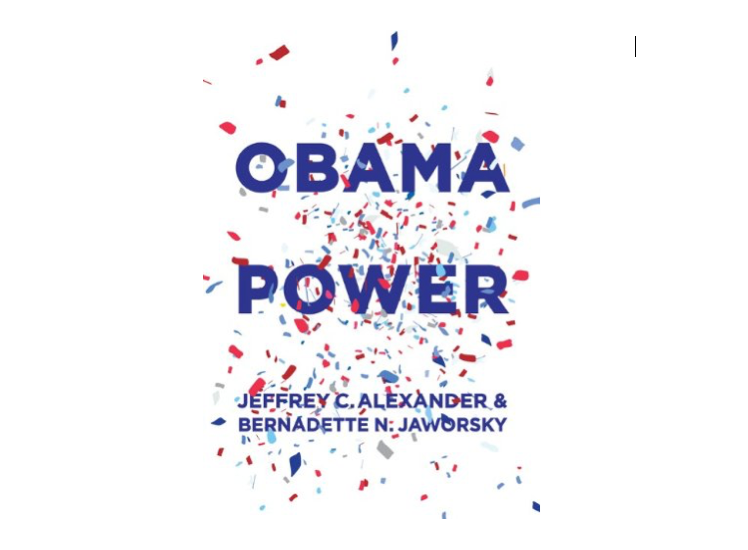
Just how did Barack Obama manage to turn things round and win a second term when the political tide seemed to be turning against him?
That is the central question of this short and punchy read by Jeffrey Alexander and Bernadette Jaworsky. In just over 100 pages of text that is accessible to the reader – yet painstakingly researched and data-driven – the authors chart how the president managed to recast his image in the minds of the American public to successfully win re-election in 2012.
One of the easiest things to do is to read history backwards and assume that Obama’s re-election was inevitable. It was not. It is easy to forget just how bad things were for the president in 2010. It is often said that candidates campaign in poetry yet govern in prose. The problem for Obama was that the poetry he had campaigned in had set huge expectations, unattainably high, yet the prose in which he governed had left him seeming ‘aloof’ and disconnected.
The book outlines how public frustrations with the president were beginning to boil over by the 2010 midterm elections. A Bloomberg poll at the time showed two-thirds of Americans believed that taxes on the middle class were rising, the economy shrinking and the stimulus not working. Meanwhile, the conservative grassroots ‘Tea party’ movement was energised by opposition to Obamacare and the stimulus. The result in 2010 was a disaster for the president. The Democrats lost the House and barely held the Senate. Many speculated whether Obama’s days in the White House were numbered.
So how did the president turn things around? The central argument of this book is that voters do not rationally deliberate the ‘real’ qualities of a candidate as much as they emotionally experience a connection with them (or not) through their projected ‘moral tone’. In short, for Obama, tangible accomplishments such as TARP, the Affordable Care Act, or even killing Osama Bin Laden were not enough. He had to ‘tell the story’ of what his achievements meant too, how they chimed with American values and how they would lead to a better day.
The bulk of the book outlines Obama’s response to this challenge. Rather than resort to the ‘triangulation’ of the Clinton years by seeking to make a compromise with his opponents, Alexander and Jaworsky argue that the president went ‘all-in’. He sought to recast himself as an American champion, valiantly standing up for the interests of working Americans versus vested interests. The debt ceiling crisis of 2011 presents the best example of this strategy in action. Having lost the House in 2010, Obama then successfully defined himself against it and its budget cuts in 2011. It worked. In the autumn of that year, 46 per cent approved of the president’s handling of the debt ceiling crisis yet just 21 per cent said the same about Congress.
Of course, candidates cannot just ‘decide’ to tell a winning story. It helps if you have the right opponents too. If we fast-forward to 2012, considering the story Obama wanted to tell, he really couldn’t have asked for a better opponent than Mitt Romney. The 2012 presidential campaign will perhaps long stand as a textbook example of how candidates that define their opponents win elections (a worthy lesson for the next Labour leader to learn).
With not-insignificant help from the Republicans themselves, Obama managed to define Romney as an out-of-touch, elitist from the ‘1%’ that represented self-interest and the worst excesses of a broken American system. In contrast, Obama portrayed himself ‘in the collective,’ as a president that stood in solidarity with the American people as their champion on issues such as jobs and healthcare. With the trap set, Romney walked square into it with his now-infamous ‘47%’ remarks at a private country club fundraiser with wealthy donors.
The final part of the book deals with the 2012 Presidential election campaign itself. Even with Romney typecast, helped by choosing House Republican darling Paul Ryan as his running mate, victory for the president was still not assured. Unemployment remained high and Obama faced his own setbacks too, such as a lacklustre first Presidential debate performance which led to a short lived surge in the polls for Romney. How the President handled October would still be crucial.
Nevertheless events went the President’s way. His skilful and bipartisan handling of Hurricane Sandy reinforced his competence in office, whilst his relentless message of being America’s champion versus vested interests, embodied by Romney and Ryan, cut through. This message enthused the Democratic base, which was crucial as Obama needed his winning electoral coalition of 2008 to come out for him again in 2012. They did and the president scored a decisive 51 to 47 victory in the popular vote and an even more decisive 332 to 206 victory in the electoral college. Obama had shaped the events of his first term into a winning narrative.
Looking ahead, can Labour learn lessons from Obama’s victory in 2012 for the future? It is true that Ed Miliband failed to create an emotional connection with the British public or ‘tell his story’. However, the situations are not comparable. Obama was in office whereas Labour in 2015 was in opposition. The difference being that oppositions need to overcome the ‘risk’ factor of change by discrediting the incumbent and showing why they deserve a chance – something both Romney and Miliband failed to achieve.
For incumbents such as Obama in 2012 or David Cameron in 2015 the task was different. As Alexander and Jaworsky so compellingly set out in just 109 pages, their task was to shape their achievements around a winning narrative and show that their opponents were not worth the risk. Both men succeeded. This book provides a must-read manual to future struggling incumbents on how it is done.
———————————
Keiran Pedley is a polling and elections expert at GfK and tweets about politics and opinion polling @keiranpedley
———————————
Obama Power
By Jeffrey C Alexander & Bernadette N Jaworsky
Polity Press | 140pp | £16.99