
Local government officers are people to be hugely admired. Not only do a large proportion of them go above and beyond the duties of their job description, they do one thing that people in many other walks do not have to consider. They do not let on their own opinions.
As well as remaining straight-faced and neutral when having to answer the inanest questions, they cannot ever publicly let on their true feelings about the place in which they work.
In the late 1990s I worked as a council officer in Swadlincote, South Derbyshire. During my time working as an officer I always had to bite my tongue but now I do not have to.
To get to work every morning I had to drive past derelict factories and slag heaps. While the local residents were lovely, salt of the earth people, I was still faced with the fact that at lunch if I popped out of the office I had to walk through a decrepit town centre that really should have been knocked down in an earlier age. I hated it.
Now I have got that out of my system, and I feel so much better for it, I want to tell a story of rebirth.
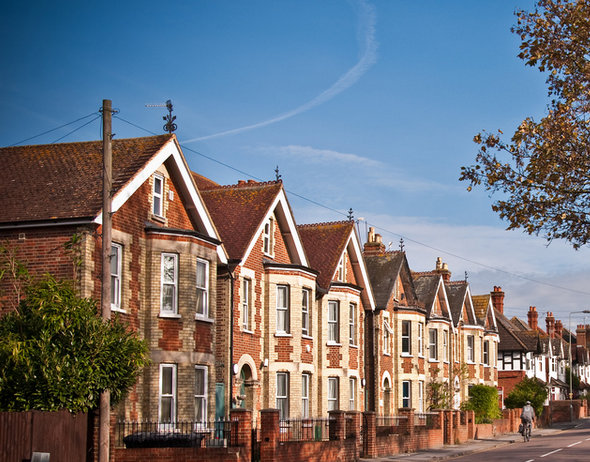
Fifteen years later Swadlincote is a fantastic little town. So much has been done to make it a desirable place to live. It has got new shops, both on the high street and on edge of town retail. It has got a great little cinema and places to eat. For heaven’s sake it even has that staple of modern day suburbia, a Prezzo.
These days Swadlincote is absolutely the sort of town you would not mind living in.
A huge part of Swadlincote’s regeneration has been brought about through new jobs. It is lucky to have benefitted from the nearby Toyota car factory, and it has welcomed a great deal of warehousing and distribution. In many ways it is the epitome of a thriving and renewed Midlands town.
Of course, going hand in hand with new jobs and regeneration has been the desire of families for better housing and to meet that need new homes have sprouted up all around the place.
In what was once a solid working class Labour area, it is noticeable that the people living in Swadlincote are changing too.
The same families who, generation upon generation, were once wedded indelibly to the mines, the local pottery industry and often social housing, are now homeowners striving to pay for extensions, nicer cars and holidays for themselves and their children.
There is nothing wrong with such aspirations. It is a great indicator of how for a great many of us over the years how our lives have been improved.
But is a challenge for Labour and one we did not address at the last election. In truth it is a challenge we probably have not effectively addressed for more than 10 years.
Labour is in great danger of becoming an irrelevance in many towns across the Midlands because we are not seeking to address the issues that matter to the people that live there, we simply have given up trying to understand them.
The facts are stark. In 2005, South Derbyshire returned a Labour member of parliament, Mark Todd, with a majority of 4,495. The Tories took the constituency from us five years later claiming a majority of 7,128.
Where one might have expected something of a turnaround on 7 May this year, incumbent MP Heather Wheeler increased her majority to 11,471. Wheeler’s vote share went up by 4.4 per cent, Labour’s down by 4.6 per cent.
On that awful night of results four months ago it was a story told again and again across the region.
Lewis Baston’s excellent pamphlet ‘Is ‘southern discomfort’ spreading’ paints a worrying but largely accurate picture of the challenge facing Labour in the type of seats we once held in the Midlands and undoubtedly must do again if we want to form a government any time soon.
The only way for Labour to deliver such seats will be to ask residents what really matters to them and then actually listen.
Was the bedroom tax the issue to deliver seats across the Midlands? Or was it price-fixing energy? Did moving forward will the nationalisation of rail have any impact in constituencies which have not had stations since the days of Dr Beeching?
I do not know the answers but we must find out.
While the key issues may have some commonality throughout the country (or they may not) we cannot for one second imagine that the solutions that we offer will be the same in once marginal market towns as in great cities of the north.
Let us sincerely hope that our new leadership realises that there is life outside of the capital and our heartlands or we will be doomed to many more nights like 7 May.
———————————–
Leon Spence is a county councillor and Labour lead for children and young people at Leicestershire county council. He tweets @CllrLeonSpence
———————————–
Do you seriously think that Corbyn and McDonnell give a monkey’s about the kind of people and places that you are describing?
But if they do not – we are out of power until 2025 or later which William Hill now estimate will happen.
Yes I believe they do, which is why they talk about things like investment in infrastructure, creating better jobs, better public services, building more social housing (which in turn helps bring down house prices, making then more affordable for people on average incomes). These are the things that matter to ‘ordinary working people’.
I know Blair and Brown didn’t give a monkey’s for the towns concerned.
Actually they did for the simple reason that they wanted to win elections.
It is so much the relevance of the campaign from the start that counts.
In Northampton South we got a swing to Labour and it was all down to focusing on the issues that count in the area and not giving up on the electorate just because they deserted us in the past.
Lacing it together was a superb team of council candidates and an outstanding PPC in the form of Kevin McKeever who could scent out issues and what would work for us.
We are in danger of becoming even more irrelevant under Corbynite metropolitan/ cosmopolitan policies. If Labour is successful in holding Wales next May, perhaps we should establish a distinct party for the Midlands, with our own leader, and campaign for an Assembly for the Midlands to be set up with the same devolved powers as in Wales.
Funny how you campaigned to kick out the Militant when they tried to establish a party within a party, but it’s alright to do it when the centre right doesn’t get its way electorally.
Actually, Militant did establish an exclusive ‘party within a party’ in many parts of the Midlands and North West, where I lived from 1983-1992. They would not let mainstream Labour supporters join in places like Coventry, because they wanted to maintain their grip on constituency parties and get more MPs like Dave Nellist and Jeremy Corbyn elected. Labour does not have a ‘centre right’. It has always been an alliance of Social Democrats and Democratic/ Christian Socialists, with an extreme wing of Marxist-Leninists, who have now taken over again. They have nowhere else to go after the fall of continental Communism. Strengthening the regional basis of the party, which has also always been its strength in Wales, Scotland and elsewhere, is a good way of keeping it democratic and close to its real bases outside London. The hard Left has never understood, or supported devolution. It has always relied on having a fistful of red power in London, Liverpool and Glasgow (which, in the latter case, it has now lost). Besides which, as I keep pointing out, the majority of Labour Party members did not vote for Jeremy Corbyn in the first round of the ballot. Funny how its taken me a paragraph to correct all the errors in your one sentence!
I had several uncles who went down the mines aged 14.
One owned a semi before he fought in the second world war,
Oh I do love this “The only way for Labour to deliver such seats will be to ask residents what really matters to them and then actually listen”.
Except, if they ask for something that Lord Sainsbury or Progress don’t like, we completely ignore them.
Who cares what the electorate think? They may have voted in the Conservative party, and Tony Blair three times, but they’re just not left wing enough to deserve us.
I live in Northampton (someone has to) and this article speaks to me. With all respect for local government staff, officers are sometimes more committed and full of themselves than competent. In a place where the local economy is orientated towards the private sector, I am dismayed that the Corbynist cult has nothing to say to people who live outside the metropolis, do not work in the public sector and might still have progressive views on some subjects.
On the contrary, we spent far too much time “listening to the public” via poor quality “research”, focus groups and opinion polls and far too little time thinking through the effects and consequences of the collapse of free market liberalism and our response to this. As a result we finished up with a set of incomprehensible and often contradictory policies, much like public opinion itself. “The public” often wants mutually exclusive outcomes: low taxes and good public services for example. And public opinion turns heavily on the question asked: do you want an ice cream or a kick in the groin produces a predictable reply!
Listening can be as simple as talking to people on their doorsteps, street level meetings in a house, surveys of residents about particular issues. This is what Ernie Graf was talking about amongst other things and was ignored as the campaigning groundwork was not laid early enough and voter ID swung predictably into action as the modus operandi of the election campaign. Nothing to do with focus groups. Labour’s job is to make our policies articulate with people’s concerns, not just mirror Tory policies thinking it will make us electable – it won’t: the Tories do Tory policy so much better. The crisis of neoliberalism is affecting and will increasingly affect people across the board and we have to have something to say about how we challenge and move beyond this and why it’s important for everyone’s lives bar the 1% at the top. Dare I say it but we need to be building alliances across communities and this requires some hard and difficult work. My worry is that neither hard left megaphone politics nor timid social democratic tinkering are up to the job. We need courage and imagination.
10 miles away but totally out of touch.
One thing you have to have as a local government officer is an understanding of the town or area you are working in; a prerequisite for delivering to the community. “I hated it” hardly demonstrates an officer that had any empathy or understanding. What I can reveal as a long standing Labour Councillor in South Derbyshire is that fortunately Leon Spence was relatively unknown in the role. It is fortunate that irrespective of recent Tory control there has been growth in Swadlincote that has brought about some change. Many of those “salt of the Earth people who worked hard in the key industries are now in their later years and a new population has changed the community as a result of housing growth and a migration from the West Midlands. Yes they are aspirational but many have brought their politics with them. To be frank there is little sustainable employment and Swadlincote is in the main a dormitory for the nearby cities. My colleagues in the Labour Group are much offended by the references in the article published by Leon Spence, it is unfortunate that he has not chosen his own location North West Leicestershire to draw conclusions of the direction of voting intentions of people in the East Midlands, we believe he could learn an awful lot more. One thing I note is that with less inward migration the Labour vote appears to deteriorated more. Maybe he would not cause offence or include inaccuracies as he has done in reference to Swadlincote.
Leon Spence clearly has a lot learn from the voters that did not vote Labour in North West Leicestershire
You have to actively listen and act upon what you are hearing. That’s what Jeremy Corbyn is doing and why he has got where he is. At least people now can see a difference between the Tories and Labour – something that was becoming more and more difficult to do.